by Jemi Fraser
If you're reading this, you have a dream. At one point it started out as a little dream - a dreamlet if you will. Cute, cuddly, soft, sweet. But...
Like all other living things, dreams have a growth cycle.
Yours might be in the diaper stage - in constant need of an overwhelming amount of care and attention. As a first time caregiver of a dreamlet, you're unsure of the steps and worry you'll never be good enough. The learning curve is steep but when things go well, there's nothing better in the whole world.
Soon your little dreamlet is taking those first steps and you're creating that incredible first manuscript that will fill you with wonder and joy as those steps combine to create a whole.
After a while, your dream is filled with confidence and joy and making friends of its own. You've found other caregivers (I highly recommend Agent Query Connect for this!) and you are learning how to take care of their dreams as well.
Then your dream hits those unruly adolescent times and starts to rebel. You've learned enough as a caregiver to realize how amazingly little you know. You try to enforce curfews and rules but your dream laughs in your face. Control me? I don't need control! You think you know what I need? Think again.
Sigh.
But don't give up! You're so close to having your little treasure out in the world. You need to learn new strategies, integrate what you've learned with new techniques, polish, shine, trim, tweak, change, rework and rework again while you talk to other dreamers to see how they nudge their dreams out into the world.
I know sometimes those little dreams can be nightmares (mine is currently giving me the same heebie jeebies I got reading my first Stephen King novel), but if you want that dreamlet to achieve its full potential (really deep down want it!), then don't give up. Keep learning. Keep loving it, nurturing it and inching it towards independence.
And when your dream is standing proudly on its own, reaping its own glory, stand back and let the moment fill you with joy. But don't stand for long - another dreamlet is waiting.
So, what stage is your little dreamlet at?
Jemi Fraser is a dream wrangler and aspiring author of contemporary romance. She blogs and tweets while searching for those
HEAs and encouraging her dreamlets to mature.

Friday, May 3, 2013


Monday, April 29, 2013
The Power of the Indie
by Mindy McGinnis
Previous to landing a book deal for NOT A DROP TO DRINK, I'd been writing and failing for ten craptastic years. I had the conviction of knowing exactly what I wanted to do with my life and the research skills to know that the odds were against me. But that's kind of where I tossed my fist in the air and dared the world to deny my talent.
And it totally did. For a long time.
Which is all my own fault. Sure, I read those numbers and thumbed my nose at them (fine - power to the bold) but that's where I let my Screw-You-Reality attitude get a little out of control. And the research stopped. Any kind of footwork stopped. I was going to be the writer of old - the one that banged out a manuscript in solitary, mailed off their tome to NYC and became ridiculously famous overnight, all while huddling under a bubble of anonymity and never doing the real work.
Previous to landing a book deal for NOT A DROP TO DRINK, I'd been writing and failing for ten craptastic years. I had the conviction of knowing exactly what I wanted to do with my life and the research skills to know that the odds were against me. But that's kind of where I tossed my fist in the air and dared the world to deny my talent.
And it totally did. For a long time.
Which is all my own fault. Sure, I read those numbers and thumbed my nose at them (fine - power to the bold) but that's where I let my Screw-You-Reality attitude get a little out of control. And the research stopped. Any kind of footwork stopped. I was going to be the writer of old - the one that banged out a manuscript in solitary, mailed off their tome to NYC and became ridiculously famous overnight, all while huddling under a bubble of anonymity and never doing the real work.
- Like agent research
- Like market research
- Like building a brand
- Like going to conferences
- Like talking to librarians, who (btw) pretty much know everything
- Like going to author signings to see how pros did it
- Like visiting bookstores to mine the brains of another kind of pro
Even recently I had wondered to myself if hitting the sidewalks and prowling bookstores was a strategic move. Aren't they going to buy my book anyway if they think it looks good? How does killing time with an Indie owner who will have - at most - three copies of my book on their shelves at a time really benefit me in the long run?
But I'm a no-stone-unturned kind of girl. I know the power of libraries, so I decided to look into the power of the bookstore. And - hot damn.
I'm lucky enough to have two indies somewhat nearby (in country speak - within a half-hour drive), so I dropped in to introduce myself and say hi. I walk into bookstore number one and introduce myself to the owner, immediately spotting the cover of a fellow Lucky13 on her racks. I mention her title, and...
Oh, it seems that the author's roommate from college lives here in town. Yeah, she pops in all the time. Maybe we could do some kind of joint signing once my book comes out? And, are those bookmarks I see you have there? Oh yes, please give me a pile - I have tons of teens filter through here when school lets out, plus this Friday is the first weekend of good weather so the foot traffic will be through the roof... can I have more than that? I'll be able to unload them pretty quickly. What's your book title again? Hmm... yes I think I remember seeing that in the fall ARC boxes I just got from HarperCollins (emphasis mine)... I'll be sure to dig it out after you leave and put it on top of the TBR pile.
OK. That went well. Even though my head is spinning a little I think I'll walk a couple blocks to the next bookstore and see if I can leave the rest of these book-
WOW! That's gorgeous cover, these will go fast. Do you have more? You know, we have a teen writer's group that meets monthly, would you like to come speak to them sometime about your process? We don't have a date set up for May yet, but next time you're in town why don't you stop by with some more bookmarks and we'll hammer something out. The kids would love to meet you, I'm sure. What's your pub date again? Would you like to do a signing? We can work around your schedule and we'll handle all the local publicity...
Hmm.... Now there's two people pushing my book for me to the prime market with high traffic and all I had to do was walk in the door. Mindy needs to buy more bookmarks.
_______________________________________________________
Mindy McGinnis is a YA author and librarian. Her debut, NOT A DROP TO DRINK, is a post-apocalyptic survival tale set in a world where freshwater is almost non-existent, available from Katherine Tegen / Harper Collins September 24, 2013. She blogs at Writer, Writer Pants on Fire and contributes to the group blogs Book Pregnant, Friday the Thirteeners, From the Write Angle, The Class of 2k13, The Lucky 13s & The League of Extraordinary Writers. You can also find her on Twitter, Tumblr & Facebook.
Mindy McGinnis is a YA author and librarian. Her debut, NOT A DROP TO DRINK, is a post-apocalyptic survival tale set in a world where freshwater is almost non-existent, available from Katherine Tegen / Harper Collins September 24, 2013. She blogs at Writer, Writer Pants on Fire and contributes to the group blogs Book Pregnant, Friday the Thirteeners, From the Write Angle, The Class of 2k13, The Lucky 13s & The League of Extraordinary Writers. You can also find her on Twitter, Tumblr & Facebook.
Friday, April 26, 2013
Five Ways to Ask Successfully
by +Jean Oram
While the following tips on how to ask successfully are geared towards writers, you can easily apply them to all areas of your life any time you need to ask for something--whether it is a book review or having the neighbour mow your lawn while you're away.
In a lot of ways favours make the world go around. The problem is that they don't always 'just happen' when we need them to. That's why it is important to learn how to give voice to your needs in a way that leads to success. (In other words your 'ask' isn't all ME ME ME!!)
First a little backstory:
Last weekend I held what I'd consider a successful online promotion for myself and 16 other authors on The Lovebug Blog. (You can see the promotion and download 18 great books for free or almost free. You can also read more about what surprised me about the promo and social media effects on my writing blog, The Helpful Writer.)
Herein lies some of the success: I had a really simple ask. Really simple. Basically my ask could be summed up as: send me your free book's info (almost all of the authors I approached in my network had a perma free book or one that they could put on a price promo for the weekend if they wanted to), and I will share it with my readers via my Earth Day promo: Save a Tree, Read an Ebook by using Facebook, Twitter, my blog (obviously) as well as my mailing list. I didn't ask them to promote the event or anything beyond sending me their info so I could share it with my readers--also their target audience.
In essence, this event was me doing something for them--and yes, it would benefit me as well. But it would really benefit my readers--they would get 18 great reads from authors they may not have read and who had risk-free books (i.e. free). This is starting to look like win-win-win isn't it?
My simple ask worked well, I think, and the promo benefited everyone. Over 4000 people (according to Facebook stats) saw the collage of all our book's images that I had made and there were over 1200 visits to that post in a 48 hour period with the average visitor clicking on more than one book for download.

How did that success happen? Hint: it wasn't me. I think, in part, because I hadn't asked for a ton from these authors and was helping them they wanted to return the favour by spreading the word as well. (And they did a FABULOUS job--simply stunning!!!) As well, they were able to promote themselves but in a way that wasn't all ME ME ME. It was hey readers, look! 18 free books for you! They were offering something of value to someone else that included them, but wasn't all about them.
I understand that might sound unkind. But when you are busy, and have recently worked with an amazing group of GREAT authors who are willing to do some heavy lifting and work WITH you… it changes your expectations. In effect, it has reduced my patience and tolerance for the ME ME ME asks. In other words, when I get an email with very little information about the actual ask and the asker pretty much demands I somehow work some magic on their career, it frustrates me. Why should I help? Just because I am a nice person?
As more authors band together to share the burden of promotion there are some things worth keeping in mind when it comes to asking from others. Here are my tips on how to make that ask successful:
1. Be polite and respectful of the other person's time.
This might just be the Canadian in me, but if the person you've asked a favour of replies that they don't have the time to help you out, or they reply and share the info you've asked for, be thankful they took the time to reply. And for heaven's sake thank them for it. This can really turn the tables for you. It makes you look like you actually care about the other person as well as their time. I can't tell you how many times I reply to someone's request and they don't reply back. People who do that--to me--end up looking like a greedy taker/user. I don't expect much, just a one-line acknowledgement saying thanks. And don't you dare try and tell me you are too busy to thank someone. You weren't too busy to email the person in the first place, so you aren't too busy to say thank you--something that takes even less time.
When it comes to the original email you are going to send, think of the info this person may need ahead of time and put it in your initial email. Mention what you want. Don't waste their time as well as your chance to make a favourable first impression. Some people say you should make the ask a curiosity-based thing where they have to email you back to find out more. Good luck with that. Some people can pull it off, but for the majority of us it is a kiss of death that just annoys the receiver. Be respectful of the other person's time. If they are a writer, be cognizant that your request could quite possibly be taking away from their writing time.
Be short, sweet, and to the point. Put yourself in their shoes. And be focussed.
(While this may sound harsh and make you cringe at the idea of asking from another person, don't. Just make sure you aren't wasting someone else's time. That's the big thing I'm trying to convey here. It is okay to ask for help just do it well.)
2. Don't expect a free ride. What can you do for them in return?
Ask what you can contribute. If you aren't sure, ask.
If you have ideas on how you can contribute, mention it--even if it feels small. Maybe you have a great number of Twitter followers who hang on your every word, or you are writing a magazine article and can mention them or their book, maybe it is something very small. Something. Anything!
Whatever it is, offer to help. I managed to turn a no into a yes the other day just by asking what I could do to help.
3. Make it easy. Easy for them to say yes. Easy for them to help you.
Give them every reason to say yes and not no. And frankly, who cares if you have a great reviewer quote? Tell the person what you have that their readers or they may want/need/can use. How do you fit in to the picture? And honestly, I would much rather read your blurb than some book review quote. (In book club we ruthlessly mock book review quotes because half the time they are taken out of context or are so generic they mean nothing. Eg. This is a laugh out loud book. Or This book will keep you on the edge of your seat. See what I mean? Nothing. Doesn't even tell me the genre and whether it would appeal to my readers.)
4. Be gracious and don't expect the world. Make your requests reasonable.
Don't expect your own special post or top billing--especially if the person you are contacting doesn't do that. And if they are doing something like that for you, be reasonable about it. Be gracious. And certainly don't badmouth the person. Ever.
5. Follow through.
Do what you say you will, when you say you will. And for crying out loud don't use some lame excuse that someone was sick or your dog barfed all over your slippers. You are an adult. We all are. And we all have our own sh*t going on. Man up--even if you are of the female persuasion. We don't need to hear about your tragedies because we all have our own that we are struggling with. This is business. Just because you are on your couch in your jammies yelling at your kids when you write the ask email, it doesn't mean it isn't business. Treat it as such and you will go further.
Remember, you're mama might know you're special and have years of backup knowledge, but to a stranger you are just some joe--prove you are something special and worth helping out. They are doing you a favour out of the goodness of their heart--they owe you nothing. Always keep that in mind.
Now that you've seen asking for favours from the write angle, what do you think? What do you have to add? What turns you off? What makes you want to say yes when asked for a favour? What makes you want to help others?
Thanks for sharing!
Jean Oram writes chick lit contemporary romances and is a sucker for a nice ask. Her first book Champagne and Lemon Drops is free on most major ebook vendors. Her short story, Crumbs, is in The Fall: Tales From the Apocalypse which also includes many other wonderful From the Write Angle authors. You can get more free romance on her site www.jeanoram.com, more writing tips at www.thehelpfulwriter.com. You can follow her on Twitter: @jeanoram.
While the following tips on how to ask successfully are geared towards writers, you can easily apply them to all areas of your life any time you need to ask for something--whether it is a book review or having the neighbour mow your lawn while you're away.
In a lot of ways favours make the world go around. The problem is that they don't always 'just happen' when we need them to. That's why it is important to learn how to give voice to your needs in a way that leads to success. (In other words your 'ask' isn't all ME ME ME!!)
First a little backstory:
Last weekend I held what I'd consider a successful online promotion for myself and 16 other authors on The Lovebug Blog. (You can see the promotion and download 18 great books for free or almost free. You can also read more about what surprised me about the promo and social media effects on my writing blog, The Helpful Writer.)
Herein lies some of the success: I had a really simple ask. Really simple. Basically my ask could be summed up as: send me your free book's info (almost all of the authors I approached in my network had a perma free book or one that they could put on a price promo for the weekend if they wanted to), and I will share it with my readers via my Earth Day promo: Save a Tree, Read an Ebook by using Facebook, Twitter, my blog (obviously) as well as my mailing list. I didn't ask them to promote the event or anything beyond sending me their info so I could share it with my readers--also their target audience.
In essence, this event was me doing something for them--and yes, it would benefit me as well. But it would really benefit my readers--they would get 18 great reads from authors they may not have read and who had risk-free books (i.e. free). This is starting to look like win-win-win isn't it?
My simple ask worked well, I think, and the promo benefited everyone. Over 4000 people (according to Facebook stats) saw the collage of all our book's images that I had made and there were over 1200 visits to that post in a 48 hour period with the average visitor clicking on more than one book for download.

How did that success happen? Hint: it wasn't me. I think, in part, because I hadn't asked for a ton from these authors and was helping them they wanted to return the favour by spreading the word as well. (And they did a FABULOUS job--simply stunning!!!) As well, they were able to promote themselves but in a way that wasn't all ME ME ME. It was hey readers, look! 18 free books for you! They were offering something of value to someone else that included them, but wasn't all about them.
Unexpected Offshoot
However, because these authors were so WONDERFUL, there was an unexpected offshoot--the requests I now receive from strangers have to be THAT much better in order for me to be interested.I understand that might sound unkind. But when you are busy, and have recently worked with an amazing group of GREAT authors who are willing to do some heavy lifting and work WITH you… it changes your expectations. In effect, it has reduced my patience and tolerance for the ME ME ME asks. In other words, when I get an email with very little information about the actual ask and the asker pretty much demands I somehow work some magic on their career, it frustrates me. Why should I help? Just because I am a nice person?
As more authors band together to share the burden of promotion there are some things worth keeping in mind when it comes to asking from others. Here are my tips on how to make that ask successful:
1. Be polite and respectful of the other person's time.
This might just be the Canadian in me, but if the person you've asked a favour of replies that they don't have the time to help you out, or they reply and share the info you've asked for, be thankful they took the time to reply. And for heaven's sake thank them for it. This can really turn the tables for you. It makes you look like you actually care about the other person as well as their time. I can't tell you how many times I reply to someone's request and they don't reply back. People who do that--to me--end up looking like a greedy taker/user. I don't expect much, just a one-line acknowledgement saying thanks. And don't you dare try and tell me you are too busy to thank someone. You weren't too busy to email the person in the first place, so you aren't too busy to say thank you--something that takes even less time.
When it comes to the original email you are going to send, think of the info this person may need ahead of time and put it in your initial email. Mention what you want. Don't waste their time as well as your chance to make a favourable first impression. Some people say you should make the ask a curiosity-based thing where they have to email you back to find out more. Good luck with that. Some people can pull it off, but for the majority of us it is a kiss of death that just annoys the receiver. Be respectful of the other person's time. If they are a writer, be cognizant that your request could quite possibly be taking away from their writing time.
Be short, sweet, and to the point. Put yourself in their shoes. And be focussed.
(While this may sound harsh and make you cringe at the idea of asking from another person, don't. Just make sure you aren't wasting someone else's time. That's the big thing I'm trying to convey here. It is okay to ask for help just do it well.)
2. Don't expect a free ride. What can you do for them in return?
Ask what you can contribute. If you aren't sure, ask.
If you have ideas on how you can contribute, mention it--even if it feels small. Maybe you have a great number of Twitter followers who hang on your every word, or you are writing a magazine article and can mention them or their book, maybe it is something very small. Something. Anything!
Whatever it is, offer to help. I managed to turn a no into a yes the other day just by asking what I could do to help.
3. Make it easy. Easy for them to say yes. Easy for them to help you.
Give them every reason to say yes and not no. And frankly, who cares if you have a great reviewer quote? Tell the person what you have that their readers or they may want/need/can use. How do you fit in to the picture? And honestly, I would much rather read your blurb than some book review quote. (In book club we ruthlessly mock book review quotes because half the time they are taken out of context or are so generic they mean nothing. Eg. This is a laugh out loud book. Or This book will keep you on the edge of your seat. See what I mean? Nothing. Doesn't even tell me the genre and whether it would appeal to my readers.)
4. Be gracious and don't expect the world. Make your requests reasonable.
Don't expect your own special post or top billing--especially if the person you are contacting doesn't do that. And if they are doing something like that for you, be reasonable about it. Be gracious. And certainly don't badmouth the person. Ever.
5. Follow through.
Do what you say you will, when you say you will. And for crying out loud don't use some lame excuse that someone was sick or your dog barfed all over your slippers. You are an adult. We all are. And we all have our own sh*t going on. Man up--even if you are of the female persuasion. We don't need to hear about your tragedies because we all have our own that we are struggling with. This is business. Just because you are on your couch in your jammies yelling at your kids when you write the ask email, it doesn't mean it isn't business. Treat it as such and you will go further.
Remember, you're mama might know you're special and have years of backup knowledge, but to a stranger you are just some joe--prove you are something special and worth helping out. They are doing you a favour out of the goodness of their heart--they owe you nothing. Always keep that in mind.
Now that you've seen asking for favours from the write angle, what do you think? What do you have to add? What turns you off? What makes you want to say yes when asked for a favour? What makes you want to help others?
Thanks for sharing!
Jean Oram writes chick lit contemporary romances and is a sucker for a nice ask. Her first book Champagne and Lemon Drops is free on most major ebook vendors. Her short story, Crumbs, is in The Fall: Tales From the Apocalypse which also includes many other wonderful From the Write Angle authors. You can get more free romance on her site www.jeanoram.com, more writing tips at www.thehelpfulwriter.com. You can follow her on Twitter: @jeanoram.
Wednesday, April 24, 2013
Want Writing to be a Profession not a Hobby? The First Step is ADMITTING It
by Sophie Perinot
If you read this blog chances are you have a dream. A dream that the writing you are already doing in spare moments (and possibly without telling anyone about it) will someday be published making it possible for you to write “author” on the “profession” line on forms (even as you hang onto another professional incarnation as well for the purposes of keeping bread on the table).
The journey from hobbyist to professional is different for every successful writer (and for the purpose of this post I am—rather arbitrarily—defining successful as someone who has a book out, in whatever format, available for purchase), but I’d like to posit that one step is essential. You have to OWN your ambition. That’s right, ADMIT that you want your writing to be more than a hobby. The sooner the better.
On the face that sounds simple. I can tell you from personal experience it’s not (and, given the amount of heads I see nodding in the virtual audience I am not alone). Here is why I think this step feels more like a leap—off a cliff:
1) When you write as a hobby you don’t really have to put yourself on the line. Nobody has to know you are writing. You cannot fail at something nobody knows you are doing. Even if you choose to share your completed stories with friends or family there isn’t much risk. If your mother (or a friend) doesn’t like your book she is going to be too polite to say so. Besides, chances are any home-grown audience will love what you’ve written because they love you. When we evaluate something created by a person we care about, we are likely to see it with kind and enthusiastic eyes.
2) Hobbies are low pressure. Hobbies are something we fit into our free time as the mood strikes us. There is not a lot of accountability involved. If you plan to finish knitting a scarf for your husband today and don’t—unless you’ve promised it to him for a special occasion—nothing happens. If you say you are going to write a thousand words a day nobody is going to hold your feet to the fire until you get done (particularly if you haven’t even told friends you are writing).
3) Going public with your dream of publication opens the door to a whole lot of hurt. There is no use lying about that. The big fear of course is public failure. If you proclaim that you intend to write and publish a book and then don’t . . . ouch. Or you could have a book published and it could belly flop into oblivion. But even before you get to the edge of that particular precipice, the road to publication involves finding an agent and a publisher—steps that require you to show your manuscript to industry professionals. Handing over your manuscript to strangers brings with it the inevitable sting of rejection when someone (and doubtless more than one someone too) tells you your baby isn't good enough or isn't marketable.
Why then am I urging you to give up your amateur status? Because if there was ever a “no guts no glory” situation this is it. Every one of the “upsides” to writing as a hobby that I’ve listed above has major career-foiling-downsides
Like your anonymity? It’s going to be fleeting anyway. To be a published author you need to let strangers see your work. To start with you will need some critical editorial eyes. Later, you can hardly expect to get an agent or a publisher without showing somebody your manuscript. And while a catch-as-catch can approach to writing time may keep your stress low it is likely to keep your page count low as well. By thinking of writing as your business you up the ante and increase the chance that you will behave professionally—developing a serious writing schedule and sticking to it; learning about the business end of publishing.
Coming out of your hobbyist hole also puts you in a position to mingle with and learn from other serious writers—whether at a writers’ conference or in an on-line writing community. I mean you can hardly join a critique group if you can’t admit you are writing a novel right? And it is pretty hard to sit in on a conference panel with a bag over your head to mask your identity. Finally in an industry where branding is increasingly important admitting you intend to be an author lets you get started on developing your personal brand, stretching your writerly toe into the realm of social media or maybe even setting up a writing related website or blog.
So, what are you waiting for? Stop quietly working on manuscripts and just storing them on your hard drive—take a giant step along the road to realizing your goal of being a published writer by admitting precisely which road you are on. Start small, by telling someone who will hold you to your goal. Get an “I am a Writer” tee-shirt. Find a supportive writers community. Lurk in the back for a while if you need to but then—boom—one day I’ll expect to see you standing on your chair and shouting “my name is X and I want to be a published writer.” Mine will be the voice answering back, “Hello and welcome!”
Sophie Perinot is currently holed up in a corner of the 16th century working to finish her next novel. Her first novel, THE SISTER QUEENS, was published by NAL/Penguin in 2012 and is on sale in bookstores (brick and mortar and virtual) everywhere. Learn more about TSQ here.
Monday, April 22, 2013
Getting Your Foot in the Gate: the subjective nature of writing
by Cat Woods
This past weekend I took eight students to State Speech. While I watched rounds, coached kids and waited for results, I was reminded that speech--like reading and writing--is a completely subjective endeavor. An exact set of standards does not exist for any of the above activities. Writers cannot shoot the most baskets to secure a publishing contract, just like speakers cannot run the fastest race to win a first place medal.
Instead, they must strive to best capture the readers--and judges--attention through style, voice, characterizations and story development. Speakers and writers alike must connect on a personal level with their audiences. And not a single part of this can be judged with any certainty.
To make it to State, our speakers had to get past the gatekeepers of Sub-Sections and Sections. They had to withstand the scrutiny of the more conservative, traditional judges in our tiny corner of the state to reach the more liberal and forward thinking judges from the bigger communities.
Right or wrong, this is the process. As coaches, we know that going in. An edgy piece that is perfect State material may suffer at the more conservative levels by pushing the comfort zones of the judges. Certain themes are nearly taboo in our little burgs while a broader and more accepting approach can be found elsewhere. For instance, suicide was a risky topic for one of our duos, while homosexuality and strong sexual innuendos from lesser conservative schools made our suicide pact look tame.
Some of our speechies made a conscious decision to play the odds. They prepared edgier pieces in hopes of squeaking by the conservative gatekeepers in order to impress the more liberal State audience. It paid off. While they just managed to eke out a third place in Sub-Sections, there stronger piece and non-traditional performance (for our neck of the woods) made them true contenders at the State level where they pulled the best score in one of their three rounds, beating out four of the finalists in a head-to-head showdown.
Another duo team from our Section took a more conservative approach, and while their traditional performance earned them a first at Sections, they were dead last in every round at State. They gambled the other way and didn't quite get their foot in the gate.
Both teams were polished, professional and in the top twenty-four in the state. One held back, while the other pushed the forward. Neither ultimately made it to the final round. However, the risk-takers were one point away from doing so. Next year, they will take what they learned from this experience and use it to better their chances of medaling.
Writing is no different.
Even as the general audience may seem more open to reading risky material, the gate keepers are chaining the doors. Publishing is a business and it effects our passion. Our ability to publish traditionally hinges on the whims of judges who may be more conservative than we would like.
As I continue my writing journey, I've come to realize several truths: nobody will ever write the perfect book, and gate keepers will always exist. They may evolve over time, but they will always play an integral part in the success or failure of certain written works.
In speech, it used to be against the rules to touch the floor with anything other than your feet. This year, I personally saw several speakers on their knees, doing somersaults or brushing their hands against the stage. Judges opposed to change likely gave these speakers lower scores based on their personal preferences and past tradition. It happens. It's life. It's normal. In years to come, these same judges will likely wonder why we ever had such a foolishly prohibitive rule.
Publishing is changing. Reader tastes are changing. Even writing styles and themes come and go almost overnight. What remains the same--and will forever--is that people will always read, people will always write and there will always be gatekeepers in some form or another.
Even with self-publishing, gatekeepers exist. They are, quite simply, the readers who refuse to part with their hard earned dollars for certain books. They are the bloggers who inform other potential readers of books they love to hate. They are the people we must walk past if we are to get our writing into the hands of our readers.
While I don't believe we have to write to please the gatekeepers, I firmly believe we need to understand the nuances and the power and the reasons behind their existence. We must acknowledge that on some level, the goal of publishing is to reach as wide an audience as we can within our genre, age group or niche. To do this, we absolutely must acknowledge that our writing is judged and can either earn a place on stage or that it will fall short and we will be left clapping in the wings for those successful enough to balance the fine line between stepping out of the box and capitulating to the narrow constraints of current reading standards, tastes and expectations.
This is true regardless of how we reach publication.
Who are the gatekeepers in your writing world, and how do they impact your writing journey? Do you subject yourself to balancing their wishes with your ideals, or do you simply write--gatekeepers be damned? How has your method worked out so far?
Curious minds want to know.
Cat Woods balances writing, speech coaching and mothering to the best of her ability--always hoping to impress a gatekeeper or two along the way. Her short stories can be found in Spring Fevers and The Fall, with another coming out in the Summer's Edge anthology this June. She also blogs at Words from the Woods.
This past weekend I took eight students to State Speech. While I watched rounds, coached kids and waited for results, I was reminded that speech--like reading and writing--is a completely subjective endeavor. An exact set of standards does not exist for any of the above activities. Writers cannot shoot the most baskets to secure a publishing contract, just like speakers cannot run the fastest race to win a first place medal.
Instead, they must strive to best capture the readers--and judges--attention through style, voice, characterizations and story development. Speakers and writers alike must connect on a personal level with their audiences. And not a single part of this can be judged with any certainty.
To make it to State, our speakers had to get past the gatekeepers of Sub-Sections and Sections. They had to withstand the scrutiny of the more conservative, traditional judges in our tiny corner of the state to reach the more liberal and forward thinking judges from the bigger communities.
Right or wrong, this is the process. As coaches, we know that going in. An edgy piece that is perfect State material may suffer at the more conservative levels by pushing the comfort zones of the judges. Certain themes are nearly taboo in our little burgs while a broader and more accepting approach can be found elsewhere. For instance, suicide was a risky topic for one of our duos, while homosexuality and strong sexual innuendos from lesser conservative schools made our suicide pact look tame.
Some of our speechies made a conscious decision to play the odds. They prepared edgier pieces in hopes of squeaking by the conservative gatekeepers in order to impress the more liberal State audience. It paid off. While they just managed to eke out a third place in Sub-Sections, there stronger piece and non-traditional performance (for our neck of the woods) made them true contenders at the State level where they pulled the best score in one of their three rounds, beating out four of the finalists in a head-to-head showdown.
Another duo team from our Section took a more conservative approach, and while their traditional performance earned them a first at Sections, they were dead last in every round at State. They gambled the other way and didn't quite get their foot in the gate.
Both teams were polished, professional and in the top twenty-four in the state. One held back, while the other pushed the forward. Neither ultimately made it to the final round. However, the risk-takers were one point away from doing so. Next year, they will take what they learned from this experience and use it to better their chances of medaling.
Writing is no different.
Even as the general audience may seem more open to reading risky material, the gate keepers are chaining the doors. Publishing is a business and it effects our passion. Our ability to publish traditionally hinges on the whims of judges who may be more conservative than we would like.
As I continue my writing journey, I've come to realize several truths: nobody will ever write the perfect book, and gate keepers will always exist. They may evolve over time, but they will always play an integral part in the success or failure of certain written works.
In speech, it used to be against the rules to touch the floor with anything other than your feet. This year, I personally saw several speakers on their knees, doing somersaults or brushing their hands against the stage. Judges opposed to change likely gave these speakers lower scores based on their personal preferences and past tradition. It happens. It's life. It's normal. In years to come, these same judges will likely wonder why we ever had such a foolishly prohibitive rule.
Publishing is changing. Reader tastes are changing. Even writing styles and themes come and go almost overnight. What remains the same--and will forever--is that people will always read, people will always write and there will always be gatekeepers in some form or another.
Even with self-publishing, gatekeepers exist. They are, quite simply, the readers who refuse to part with their hard earned dollars for certain books. They are the bloggers who inform other potential readers of books they love to hate. They are the people we must walk past if we are to get our writing into the hands of our readers.
While I don't believe we have to write to please the gatekeepers, I firmly believe we need to understand the nuances and the power and the reasons behind their existence. We must acknowledge that on some level, the goal of publishing is to reach as wide an audience as we can within our genre, age group or niche. To do this, we absolutely must acknowledge that our writing is judged and can either earn a place on stage or that it will fall short and we will be left clapping in the wings for those successful enough to balance the fine line between stepping out of the box and capitulating to the narrow constraints of current reading standards, tastes and expectations.
This is true regardless of how we reach publication.
Who are the gatekeepers in your writing world, and how do they impact your writing journey? Do you subject yourself to balancing their wishes with your ideals, or do you simply write--gatekeepers be damned? How has your method worked out so far?
Curious minds want to know.
Cat Woods balances writing, speech coaching and mothering to the best of her ability--always hoping to impress a gatekeeper or two along the way. Her short stories can be found in Spring Fevers and The Fall, with another coming out in the Summer's Edge anthology this June. She also blogs at Words from the Woods.
Wednesday, April 17, 2013
Picking Up Old Habits, Putting Down Old Doubts
By Matt Sinclair
As the weather has gotten warmer, I’ve allowed my twin daughters to explore an unheated area of the house. We have an attic that one day (God willing) will become our second floor. But we keep it off limits because there’s lots of stuff we don’t want them to get into for safety reasons and because they have been known to break a thing or two...or three.
One of the girls loves the attic and grabs my hand to lead me upstairs at any opportunity. While there are many things I don’t want her playing with up there, there’s also some I’m glad she likes: for example, musical instruments.
“Drum!” she says, as she smacks the skin of my conga drum. Or she runs her fingers across my acoustic guitar. In the days before daughters, I played a lot of guitar and wrote a lot of songs. I’ve gotten out of both habits. But seeing the joy on my daughter’s face as the sounds and rhythms come alive makes me want to foster that love of music in her any way I can.
All writers are different. Some need to write every day; others may go weeks without writing but write thousands of words a day when they return to the keyboard. You work within your circumstances or alter things to fit the writing schedule. Matching talents to habits is a wonderful thing, but it’s not always feasible.
Still, when you’ve gotten out of a habit, you find yourself battling twin anxieties: “I bet I can pick this right back up if I make the time” versus “I’m so out of practice I’ll never be able to do this again.”
Like most anxieties, neither does anyone a bit of good.
Lately, I’ve had to place two novels on the backburner. One is the already trunked novel that I resolved at New Year’s to get into shape and eventually publish through Elephant’s Bookshelf Press, the other is the work-in-progress I believe could be good enough to land me an agent and one day warrant better distribution through a larger publisher. (I know the math, but there’s still a part of me that wants a traditional deal.)
But life gets in the way. New priorities emerge. Bills beckon.
I wish I had advice based on experience to share how best to squash your doubts and anxieties, or offer a few bullet points of pithy tidbits to help you squeeze another half hour of writing time into your day. The best I can offer you today is this: Keep thinking and keep writing. Keep appreciating the seemingly mundane moments of life that morph into verisimilitude when you write about them. Listen to the world around you. Remember, what might be out-of-tune to your trained ears could open the world of possibilities to those who’ve barely heard the music before.
Matt Sinclair, a New York City-based journalist and fiction writer, is also president and chief elephant officer of Elephant's Bookshelf Press, which recently published its latest anthology, The Fall: Tales from the Apocalypse, which is available via Amazon and Smashwords. Earlier in 2012, EBP published its initial anthology, Spring Fevers, which also is available through Smashwords, and Amazon. Both anthologies include stories by fellow FTWA writers, including Cat Woods, J. Lea Lopez, Mindy McGinnis, and R.S. Mellette; R.C. Lewis and Jean Oram also have stories in The Fall. Submissions for its next anthology close on Friday, April 19. Summer's Edge will be published in the summer of 2013. Matt blogs at the Elephant's Bookshelf and is on Twitter @elephantguy68
Wednesday, April 10, 2013
You Might Write New Adult If...
by J. Lea López
The New Adult category is still a new thing. Some still don't think it's a thing at all, but that hasn't kept it from getting some more mainstream attention recently. Despite the growing interest, confusion about what NA is or isn't persists. Just for fun, here's a handy way to tell if you're writing NA fiction.
You might be writing New Adult...
J. Lea López writes contemporary NA and erotica. Find her on Twitter or her blog. To read some of her mainstream short stories, check out the anthologies The Fall: Tales from the Apocalypse and Spring Fevers. Find some of her erotic short stories on her Facebook page.
The New Adult category is still a new thing. Some still don't think it's a thing at all, but that hasn't kept it from getting some more mainstream attention recently. Despite the growing interest, confusion about what NA is or isn't persists. Just for fun, here's a handy way to tell if you're writing NA fiction.
You might be writing New Adult...
- If your student-by-day-crime-fighter-by-night protagonist has emotional drama on the side, but it isn't about her first kiss/prom/parents divorcing/etc.—it's about deciding who she wants to be in the world now that she's about to head out on her own;
- If you've ever been told your characters need to be younger to fit into YA, or older to appeal to adult readers;
- If the mere mention of this New York Times piece from last December, or ABC's Nightline in late February made you see red with rage. And maybe still does;
- If you have a permanent bruise on your forehead from smacking it against your keyboard every time someone says "Oh, so it has lots of sex, right?"
- If aging your characters up or down would significantly change the emotional dynamic of key elements, or make them impossible altogether—the perceived scandal in a May-December romance becomes less of an issue when the younger character is 30, just plain creepy and illegal if she's 13, but juuust right for awesome drama when she's 19 and struggling to separate from the constraints of her parents;
- If you stalk the #NALitChat hashtag on Twitter;
- If your characters are making important, adult life decisions, often for the first time. They have neither the hindsight based on years of life experience, like the 35- or 45-year-old character of adult fiction, nor the need/desire for guidance from parental figures or mentors, like the 16-year-old YA character;
- If your pulse pounds every time another awesome agent or editor tweets that they are now (finally, FINALLY!) accepting NA submissions.
J. Lea López writes contemporary NA and erotica. Find her on Twitter or her blog. To read some of her mainstream short stories, check out the anthologies The Fall: Tales from the Apocalypse and Spring Fevers. Find some of her erotic short stories on her Facebook page.
Monday, April 8, 2013
Letting Go of Your Vision
by Charlee Vale
Today, I'm going to talk about something a little different. (More because I can't stop thinking about it than anything else)
This past weekend, the play that I wrote for my Master's Thesis opened. It's called Always and it's been in rehearsal for a little over two months. I have a beautiful cast, and I'm so happy with how everything turned out. We opened to a sold-out audience!
Here are some pictures because I'm so proud!


Here's the catch—I'm not the director.
My thesis partner was the director of the show. And she's been with me since the very first version of the script. She's been honest about what she thought, and how it could change and improve. (And BOY did it change!)
I think this experience is in some ways similar to both: a writer working with an editor, and a writer seeing their work turned into a film.
As a means of making your work better, you have to let go of the image you had when you wrote it. I'm not saying you should compromise your ideas in any way! There were certainly things I stuck to my guns about, but instead, letting your mind be open to possibilities bigger than what you had imagined.
Yes, I loved the story I had written. But without outside vision, it never would have turned into the beautiful production that it was.
So don't be afraid to consider other things. Don't be afraid to completely tear your story apart and build it back up in a different way. Don't be afraid of things outside of your 'vision.' Because maybe what's out there, is JUST what your story needs!
CV
Charlee Vale is a Playwright, Young Adult writer, photographer, and tea lover living in New York City. You can also find her at her website, and on Twitter.
Today, I'm going to talk about something a little different. (More because I can't stop thinking about it than anything else)
This past weekend, the play that I wrote for my Master's Thesis opened. It's called Always and it's been in rehearsal for a little over two months. I have a beautiful cast, and I'm so happy with how everything turned out. We opened to a sold-out audience!
Here are some pictures because I'm so proud!


Here's the catch—I'm not the director.
My thesis partner was the director of the show. And she's been with me since the very first version of the script. She's been honest about what she thought, and how it could change and improve. (And BOY did it change!)
I think this experience is in some ways similar to both: a writer working with an editor, and a writer seeing their work turned into a film.
As a means of making your work better, you have to let go of the image you had when you wrote it. I'm not saying you should compromise your ideas in any way! There were certainly things I stuck to my guns about, but instead, letting your mind be open to possibilities bigger than what you had imagined.
Yes, I loved the story I had written. But without outside vision, it never would have turned into the beautiful production that it was.
So don't be afraid to consider other things. Don't be afraid to completely tear your story apart and build it back up in a different way. Don't be afraid of things outside of your 'vision.' Because maybe what's out there, is JUST what your story needs!
CV
Charlee Vale is a Playwright, Young Adult writer, photographer, and tea lover living in New York City. You can also find her at her website, and on Twitter.
Friday, April 5, 2013
Head Hopping vs Multiple POVs
by Jemi Fraser
When I first started writing, I hadn't realized there was a difference between head hopping and multiple points of view. There is and it's important! I write romance, and like many romance authors, I like to tell the story from the viewpoints of both the male and female lead characters. But I've learned to be very, very careful.
Head Hopping
But don't try it! Nora Roberts is a very talented author with a great reputation. She's also an international best seller many times over with a bazillion books sold.
Are you?
Okay then. Probably better to stick with the current trend of only switching your point of view character at a scene or chapter break.
Do you use multiple points of view when you're writing your stories?
Jemi Fraser is an aspiring author of contemporary romance. She blogs and tweets while searching for those HEAs.
When I first started writing, I hadn't realized there was a difference between head hopping and multiple points of view. There is and it's important! I write romance, and like many romance authors, I like to tell the story from the viewpoints of both the male and female lead characters. But I've learned to be very, very careful.
Head Hopping
- changing the pov character in the middle of a scene, sometimes in the middle of a paragraph
- the pov switch is shown within the sentence, often by indicating what the character is thinking (Mary wanted nothing more than to snatch the pen from his hand and shove it deep into his brain. John watched the glint in Mary's eye and took a judicious step backward.)
- the pov character is consistent throughout the entire scene
- there is a physical indicator of change - often a scene or chapter break
But don't try it! Nora Roberts is a very talented author with a great reputation. She's also an international best seller many times over with a bazillion books sold.
Are you?
Okay then. Probably better to stick with the current trend of only switching your point of view character at a scene or chapter break.
Do you use multiple points of view when you're writing your stories?
Jemi Fraser is an aspiring author of contemporary romance. She blogs and tweets while searching for those HEAs.
Wednesday, April 3, 2013
Could The Next Hollywood Be New York?
by R.S. Mellette
To work in the film industry, one goes to Hollywood; for publishing, New York. But could that paradigm change in the near future?
To work in the film industry, one goes to Hollywood; for publishing, New York. But could that paradigm change in the near future?
Way back in the 1990's, a book was something that came on paper and a movie on film. To buy a book, you went to the bookstore. To see a movie, you went to the theatre or a video store. They were two very different businesses.
Today, both movies and books are digital files. If you want to buy a book, you go to Amazon, iTunes, or Nook. To see a movie you go to ... Amazon, iTunes or Nook.
For computers, the only difference between film and literature is the size of the file. Tour a publishing house or a digital film lab without looking at the computer screens and you'll be hard-pressed to know which was which. They are both transcoding files for different platforms, QCing those files, preparing metadata and art (posters or covers), checking chapter breaks, compressing, and uploading them to the providers.
So, consider ... Motion Picture Studios don't really make movies anymore; haven't for a long time. Sure, they find the projects. They develop the material. They finance the productions, and they distribute them, but the nuts and bolts of turning ink-on-paper into images on the screen is jobbed out to production companies. Imagine makes movies mostly for Universal. Village Road Show for Warner Bros. etc. Of course there is a tight partnership, since the Studios are often putting in most of the money, but even that is beginning to lean more heavily in the direction of the production companies.
Let's say you're a publishing house. The book industry has become so volatile that you need some ballast. You need to leverage the assets you have in a way that can spread the risk. But what assets are those? You have a company full of people who know a good book when they read one, and they are willing to read a ton of them to find the gems. You have a library of good stories, and you're buying new ones all the time. But does that make you a valuable company, or the most insane person in your neighborhood book club?
What's the first thing a movie studio does? They find the projects. You, as a publisher, are sitting on a mountain of them. Not only have you found the diamonds in the rough, you've polished them and presented them to market. You have developed the material.
In your library are Romance Novels that could become a money machine in your own Harlequin YouTube channel. And you're buying new stuff. You just shelled out cash and resources for Mindy McGinnis's Not a Drop to Drink, which is screaming for a wide theatrical release. If you're good, you can lock up the film rights before Hollywood knows what hit them.
In fact, the right of first refusal on the movie is now going to be in your standard contract.
What's the next thing a studio does? They finance. You're a publishing company. You're in New York. You can't swing a big black cat without hitting a handful of hedge fund managers who would love to place a bet on a Big Six project. Where the independent film producer has to beg and explain what they are doing, you can say, "I'm the person who found Hunger Games and Harry Potter. Wanna play with me?"
So, you've got the money. You've got the properties. Now comes the tricky part every homeowner can attest to, finding the right contractor to build on your property. If only there was a high turnover rate in Hollywood. Then there would be plenty of experienced executives looking for the chance to get back into producing. They'd have the connections to put together a string of companies to produce your entire slate.
Oh, wait! There IS a high turnover rate of executives in Hollywood. You can't swing a hedge fund manager without hitting a former studio executive. Or, in my case, a current festival director who gave you this idea in the first place.
So if this is such a brilliant plan, why hasn't anyone done it before?
Not everyone has access to the intellectual property you do, and there's distribution. In the theatrical days, a company had to have a strong relationship with the theatre owners to squeeze their films into the crowded market. That's still true of theatres, but the future is on line. You, as a new studio, are going to have to have a working relationship with the platforms that distribute films, and – bingo! You do.
Amazon, iTunes, Nook, etc. You've been delivering to them for years. You have servers and staff in place to QC, package, and upload to all of these platforms. Once you are delivering films, Netflix, Playstation, Hulu, Vudu, Cinema Now and more will come knocking.
And you're vertically integrated. When people like the book they just read on their iPad; one click and they're watching the movie. What? The movie hasn't been made? They can pre-order it You'll send it directly to their device as soon as it's ready. Talk about crowd funding, a movie could be profitable before it's even shot.
And none of this takes into account the lower budgets on films. The guilds all have "made for New Media" contracts in place with attractive rates. Shooting digitally is a fraction of the cost of the old film days. You could crank out low budget Romance Movies as fast as Cali MacKay can write the books. For the bigger budget theatrical releases, you can partner up with – and learn from – a major studio. In fact, they probably own your company anyway, so the good faith negotiations will be a breeze.
But what about the writers? Will new writers be willing to sell their film rights at the same time they do their book? That's an individual choice, of course, and I hope agents and writers alike will comment here about their thoughts on the subject. Personally, I'd say yes for a few reasons.
First, you're not selling the rights, you're selling the exclusive option to buy the rights within a certain time period. At the end of that time - if they haven't sold it - you get to keep the money you were advanced, and go try to sell the option to someone else. If your agent is good, you might sell a 3 year option from the contract date. It will take two years to get your manuscript to market, and then one year to establish sales. Hollywood will read an unpublished manuscript, but they won't take a lot of interest if it doesn't have sales behind it, so you've been paid for three years of an option, when it's only costing you about six months of post-publising time.
Another reason to sell your film rights to your publisher is that they will be into your project for a lot of money. Turning the red ink on your balance sheet to black is a big motivator in the corporate world. They are going to want your manuscript to be as big of a hit as possible, and that larger investment is going to keep you on their hot sheet.
And finally, it's money! Take it! Sure, most Hollywood movies are based on books these days, but most books don't get made into movies. Yes, there's a chance that they'll hold onto the rights and do nothing, but they paid you. That's better than you and your agent shopping the project around to production companies for nothing. Let your publisher take the project to the same producers with the sales pitch, "and we have the money to produce it." You're in a win-win all the way.
Now, if only I could figure out how to make this a win for me... because, you know, it's all about me.
R.S. Mellette is an experienced screenwriter, actor, director, and novelist. You can find him at the Dances With Films festival blog, and on Twitter, or read him in the Spring Fevers and The Fall: Tales of the Apocalypse anthologies.
R.S. Mellette is an experienced screenwriter, actor, director, and novelist. You can find him at the Dances With Films festival blog, and on Twitter, or read him in the Spring Fevers and The Fall: Tales of the Apocalypse anthologies.
Monday, April 1, 2013
One Writer's Yuck Is Another Writer's Yum
by R.C. Lewis
I first heard this line on the most recent season of "Necessary Roughness" on USA.
"Don't yuck my yum."
I heard it again recently on this very cool episode of "a show with zefrank". (It's four minutes. Worth the watch. I'll wait here if you'd like.)
Here's the basic idea. I happen to like black jelly beans. To me, they are YUM. To some of you (I know, probably many of you), they are definitely YUCK. It's totally cool for you to not like what I like. What's not so cool is if in expressing your dislike, you cross that line into implying there's something wrong with me for liking black jelly beans. Or even going so far as to tell me I should stop liking black jelly beans right now.
Why am I talking about this on this particular blog? Because everything in the world of writing can be a yuck or a yum to different writers.
Where this particularly comes to mind for me is in regards to genres and categories. I write Young Adult, particularly within the sci-fi and fantasy genres. I've lost count of how many times fellow YA authors have reported getting asked one of the following: When are you going to write a REAL book? Are you going to move up to adult books eventually? Do you write teen books because there's more money in it?
Extreme annoyance, and sometimes even rage ensue.
So let's assume these are just snobbish types who look down their noses at children's literature in general, right? But wait. I've also seen the (very) occasional kid-lit writer in one category (say, Middle Grade) clearly showing disdain for another category (say, YA or chapter books).
Why are you yucking my yum?
As a reader, I'm not crazy about straight-up romances. I like novels with romance in them, but Romance as a genre isn't my thing. Still, I can understand why others like them, and that's cool. Read on, Romance readers!
As a writer, I'm pretty sure I couldn't write a chapter book to save my life. Even a middle-grade book would be a pretty big stretch for me. Attempting historical fiction would leave me a quivering, tearful mass of former-writer. As things stand, I don't think I would enjoy it. Does that mean I think FTWA contributor Sophie Perinot is out of her medieval-loving mind? No. It means she's a different writer than I am. Write on, Sophie Perinot!
Don't disparage the other colors in the jelly bean bowl. Insulting your peers can leave you lonely in the end.
Have you ever experienced someone "yucking" your writerly "yum"? Please share. You're among friends here.
R.C. Lewis teaches math by day and writes YA fiction with pride by every other time. Her YA sci-fi novel Stitching Snow will be published by Disney-Hyperion in Summer 2014. Meanwhile, you can find her at Crossing the Helix and on Twitter (@RC_Lewis).
I first heard this line on the most recent season of "Necessary Roughness" on USA.
"Don't yuck my yum."
I heard it again recently on this very cool episode of "a show with zefrank". (It's four minutes. Worth the watch. I'll wait here if you'd like.)
Here's the basic idea. I happen to like black jelly beans. To me, they are YUM. To some of you (I know, probably many of you), they are definitely YUCK. It's totally cool for you to not like what I like. What's not so cool is if in expressing your dislike, you cross that line into implying there's something wrong with me for liking black jelly beans. Or even going so far as to tell me I should stop liking black jelly beans right now.
Why am I talking about this on this particular blog? Because everything in the world of writing can be a yuck or a yum to different writers.
Where this particularly comes to mind for me is in regards to genres and categories. I write Young Adult, particularly within the sci-fi and fantasy genres. I've lost count of how many times fellow YA authors have reported getting asked one of the following: When are you going to write a REAL book? Are you going to move up to adult books eventually? Do you write teen books because there's more money in it?
Extreme annoyance, and sometimes even rage ensue.
So let's assume these are just snobbish types who look down their noses at children's literature in general, right? But wait. I've also seen the (very) occasional kid-lit writer in one category (say, Middle Grade) clearly showing disdain for another category (say, YA or chapter books).
Why are you yucking my yum?
As a reader, I'm not crazy about straight-up romances. I like novels with romance in them, but Romance as a genre isn't my thing. Still, I can understand why others like them, and that's cool. Read on, Romance readers!
As a writer, I'm pretty sure I couldn't write a chapter book to save my life. Even a middle-grade book would be a pretty big stretch for me. Attempting historical fiction would leave me a quivering, tearful mass of former-writer. As things stand, I don't think I would enjoy it. Does that mean I think FTWA contributor Sophie Perinot is out of her medieval-loving mind? No. It means she's a different writer than I am. Write on, Sophie Perinot!
Don't disparage the other colors in the jelly bean bowl. Insulting your peers can leave you lonely in the end.
Have you ever experienced someone "yucking" your writerly "yum"? Please share. You're among friends here.
R.C. Lewis teaches math by day and writes YA fiction with pride by every other time. Her YA sci-fi novel Stitching Snow will be published by Disney-Hyperion in Summer 2014. Meanwhile, you can find her at Crossing the Helix and on Twitter (@RC_Lewis).
Friday, March 29, 2013
Nice Shot! Sometimes You Just Know When It's Good
by Mindy McGinnis
As basketball season comes to a close I wanted to say a little something about a different type of muse than the one we usually talk about here. One that follows you onto the court or out to the field, one the lets you know which millisecond is the right one to release the pressure of your fingertips on the ball.
I was at an intermediate school sporting event recently to watch some of my students play. One of my non-atheltic friends came along for the ride and was astounded at the accuracy of which I would say, "Nice shot," before the ball had even completed its arc toward the basket ... to inevitably go through the hoop.
"How do you know?" she asked me. "Every time, you say that way before it goes in, and they make it."
I didn't have a good answer. I guess part of it is math—just looking at the arc of the shot or the angle that it hits the backboard. But I've never been very good at math, so I'm not sure that completely addresses what I experience in those moments. And I'm not the only one. Often I see other people celebrating the shot early—a victorious fist pump or a proud clap from a parent before the ball goes through the net. Invariably, they're former athletes.
I think it's the ghost of the confidence of my younger self, the girl who knew exactly at what moment to take the shot, make a pre-emptive pass to where I knew my teammate was going to cut through the lane, or duck an elbow from the girl guarding me who didn't appreciate the fact that I was killing her stats.
That confidence has transferred to the laptop these days. I still play ball every now and then, but I don't always know it's going to be good the way I used to. And writing can be that way as well.
We all know the days when we approach the laptop or notebook with a feeling of dread, the fear that today the words just aren't going to come, that the cursor is going to blink at us curiously while we stare back, unable to make it move forward and leave words in its wake.
But there are other times too—times when I know what I've got to say is going to flow out of me, days when I've been playing a scene in my head all day at work and the only thing I want is to get it onto the screen before it evaporates. Those days there's hardly any effort involved at all, and the story falls out of me onto the page because it wants to be there, not hidden away inside my head.
Here's hoping we all get more of the good days than the bad ones, and that there's always someone in the stands anticipating that what we write is bound to be all net.
Mindy McGinnis is a YA author and librarian. Her debut, NOT A DROP TO DRINK, is a post-apocalyptic survival tale set in a world where freshwater is almost non-existent, available from Katherine Tegen / Harper Collins September 9, 2013. She blogs at Writer, Writer Pants on Fire and contributes to the group blogs Book Pregnant, Friday the Thirteeners, From the Write Angle, The Class of 2k13, The Lucky 13s & The League of Extraordinary Writers. You can also find her on Twitter, Tumblr & Facebook.
As basketball season comes to a close I wanted to say a little something about a different type of muse than the one we usually talk about here. One that follows you onto the court or out to the field, one the lets you know which millisecond is the right one to release the pressure of your fingertips on the ball.
I was at an intermediate school sporting event recently to watch some of my students play. One of my non-atheltic friends came along for the ride and was astounded at the accuracy of which I would say, "Nice shot," before the ball had even completed its arc toward the basket ... to inevitably go through the hoop.
"How do you know?" she asked me. "Every time, you say that way before it goes in, and they make it."
I didn't have a good answer. I guess part of it is math—just looking at the arc of the shot or the angle that it hits the backboard. But I've never been very good at math, so I'm not sure that completely addresses what I experience in those moments. And I'm not the only one. Often I see other people celebrating the shot early—a victorious fist pump or a proud clap from a parent before the ball goes through the net. Invariably, they're former athletes.
I think it's the ghost of the confidence of my younger self, the girl who knew exactly at what moment to take the shot, make a pre-emptive pass to where I knew my teammate was going to cut through the lane, or duck an elbow from the girl guarding me who didn't appreciate the fact that I was killing her stats.
That confidence has transferred to the laptop these days. I still play ball every now and then, but I don't always know it's going to be good the way I used to. And writing can be that way as well.
We all know the days when we approach the laptop or notebook with a feeling of dread, the fear that today the words just aren't going to come, that the cursor is going to blink at us curiously while we stare back, unable to make it move forward and leave words in its wake.
But there are other times too—times when I know what I've got to say is going to flow out of me, days when I've been playing a scene in my head all day at work and the only thing I want is to get it onto the screen before it evaporates. Those days there's hardly any effort involved at all, and the story falls out of me onto the page because it wants to be there, not hidden away inside my head.
Here's hoping we all get more of the good days than the bad ones, and that there's always someone in the stands anticipating that what we write is bound to be all net.
Mindy McGinnis is a YA author and librarian. Her debut, NOT A DROP TO DRINK, is a post-apocalyptic survival tale set in a world where freshwater is almost non-existent, available from Katherine Tegen / Harper Collins September 9, 2013. She blogs at Writer, Writer Pants on Fire and contributes to the group blogs Book Pregnant, Friday the Thirteeners, From the Write Angle, The Class of 2k13, The Lucky 13s & The League of Extraordinary Writers. You can also find her on Twitter, Tumblr & Facebook.
Wednesday, March 27, 2013
Edit Like a Bully
by Riley Redgate
I've always thought that for writers, finding a strong circle of support is more than helpful—it's a necessity. There's so much negativity floating around the publishing world, from doubts about the industry as a whole to the odd rude critiquer one might encounter. Not to mention the inevitable self-doubt. We need people to remind us that dreams are possibilities, and that our goals are achievable.
Sometimes, though, we go too far. We find wonderful people; we find supportive and understanding writers and build a friend circle with them; we find beta readers who are tough and honest but never cruel or anything but constructive. And in the finding, we forget that there are cruel people out there.
Yep. It's obnoxious, but there are indeed those folks who roam the bookshelves looking for their next target of derision. People who are waiting to snort at your metaphors and scoff at your turn of phrase. People for whom the "benefit of the doubt" doesn't exist. (For some select books that have drawn the hatred of alarmingly large segments of the population, even normal friendly readers can turn into vitriolic book bullies. Example: the comments section of this video.)
Of course, this isn't meant to freak you out. It's just a friendly reminder that some people suck, and because writers who write for publication create work to be perused by all people—including those who suck—it's something we have to keep in mind. Turns out, too, that their lack of empathy can be helpful. At least, it's helped me,cynic realist that I am. Here are the rules I play by:
When you're editing, put yourself in the shoes of an absolute jerk. Read through slowly, line by line, and ask yourself, "If I were taking this not at all seriously, and reading it in an overly dramatic voice, could I laugh at this line? This phrase? This description?" Yep—pretend you're an absolute jerk who found a manuscript on the ground and has nothing better to do than joke about its contents with a few absolute jerk friends. It's a necessary step, because—while we all feel deeply about the stories we have to tell—when we're editing, we have to pretend there's no emotional context. We have to pretend we are those people who don't read respectfully, who don't even care enough to actually read rather than skimming. And then we have to tear our work to shreds so they don't do it for us later.
After all, if there's an opening, something in a sentence that could serve as a chink in the armor, someone out there could jump on it. Case in point: the video referenced above, and the entire series of videos that follows. (For those who don't want to click through, it's basically a YouTube celebrity reading through Twilight, picking out lines he finds particularly insipid, and mocking them.) Watching that footage reminds me of the terrifying possibility that—were my stuff ever to get published—that could happen to my work, too. Yeesh.
People always talk about "killing darlings" as if it's a horrifying prospect, but to me, what's far more horrifying is the absolute willingness of the reading public to go all-out psycho-killer-screech-screech on a book once it becomes "cool" to dislike that book. Once we distance ourselves, remember who we're writing for, and take everything we write with a healthy grain of salt, "killing darlings" stops being painful and becomes just another stepping stone to that seamless suit of literary armor.
And once you've done that, you'll have done all you can. Which means if someone does decide to take a jab at your writing, you can chalk it up to preference and not worry a bit.
Of course, this ferocious inner editor has to be shut down when you're drafting, otherwise it'll be an impediment to getting words down on the paper. In short, my tactic is this: Draft like your best friend is cheering you on. Edit like a bully.
Riley Redgate, enthusiast of all things YA, is a bookstore-and-Starbucks-dweller from North Carolina attending college in Ohio. She blogs here and speaks with considerably more brevity here.
I've always thought that for writers, finding a strong circle of support is more than helpful—it's a necessity. There's so much negativity floating around the publishing world, from doubts about the industry as a whole to the odd rude critiquer one might encounter. Not to mention the inevitable self-doubt. We need people to remind us that dreams are possibilities, and that our goals are achievable.
Sometimes, though, we go too far. We find wonderful people; we find supportive and understanding writers and build a friend circle with them; we find beta readers who are tough and honest but never cruel or anything but constructive. And in the finding, we forget that there are cruel people out there.
Yep. It's obnoxious, but there are indeed those folks who roam the bookshelves looking for their next target of derision. People who are waiting to snort at your metaphors and scoff at your turn of phrase. People for whom the "benefit of the doubt" doesn't exist. (For some select books that have drawn the hatred of alarmingly large segments of the population, even normal friendly readers can turn into vitriolic book bullies. Example: the comments section of this video.)
Of course, this isn't meant to freak you out. It's just a friendly reminder that some people suck, and because writers who write for publication create work to be perused by all people—including those who suck—it's something we have to keep in mind. Turns out, too, that their lack of empathy can be helpful. At least, it's helped me,
When you're editing, put yourself in the shoes of an absolute jerk. Read through slowly, line by line, and ask yourself, "If I were taking this not at all seriously, and reading it in an overly dramatic voice, could I laugh at this line? This phrase? This description?" Yep—pretend you're an absolute jerk who found a manuscript on the ground and has nothing better to do than joke about its contents with a few absolute jerk friends. It's a necessary step, because—while we all feel deeply about the stories we have to tell—when we're editing, we have to pretend there's no emotional context. We have to pretend we are those people who don't read respectfully, who don't even care enough to actually read rather than skimming. And then we have to tear our work to shreds so they don't do it for us later.
After all, if there's an opening, something in a sentence that could serve as a chink in the armor, someone out there could jump on it. Case in point: the video referenced above, and the entire series of videos that follows. (For those who don't want to click through, it's basically a YouTube celebrity reading through Twilight, picking out lines he finds particularly insipid, and mocking them.) Watching that footage reminds me of the terrifying possibility that—were my stuff ever to get published—that could happen to my work, too. Yeesh.
People always talk about "killing darlings" as if it's a horrifying prospect, but to me, what's far more horrifying is the absolute willingness of the reading public to go all-out psycho-killer-screech-screech on a book once it becomes "cool" to dislike that book. Once we distance ourselves, remember who we're writing for, and take everything we write with a healthy grain of salt, "killing darlings" stops being painful and becomes just another stepping stone to that seamless suit of literary armor.
And once you've done that, you'll have done all you can. Which means if someone does decide to take a jab at your writing, you can chalk it up to preference and not worry a bit.
Of course, this ferocious inner editor has to be shut down when you're drafting, otherwise it'll be an impediment to getting words down on the paper. In short, my tactic is this: Draft like your best friend is cheering you on. Edit like a bully.
Riley Redgate, enthusiast of all things YA, is a bookstore-and-Starbucks-dweller from North Carolina attending college in Ohio. She blogs here and speaks with considerably more brevity here.
Monday, March 25, 2013
Spring Cleaning
by Matt Sinclair
Call me crazy, but I’m thinking about tossing away story ideas.
Sure, I’ve been asked the same questions you probably have heard: Where do you get your ideas? What made you think of that? Did that really happen to you?
Those are not exactly the ideas I’m talking about. Most of those are the snippets of life that spill from your muse while you’re writing. They’re subconsciously woven into your nervous system and accessed by the magic of creativity, when a word or smell or that je ne sais quoi causes them to be transformed from brain zit to written word.
I’m talking about story ideas. I keep a folder of story and book ideas—fiction and nonfiction—and every once in a while when I’m unable to think of something, I look into it. But when I rap my knuckles against them, they usually sound hollow. So why hold onto them? Not that they take up a lot of space in my hard drive, but maybe it’s time for a little spring cleaning.
To tell you the truth, it’s the ideas I don’t even need to look for, the ones that are always within easy reach, that cause my synapses to fire up with energy. My brain starts to say, “Is it finally time? Can we get moving on that one? Cool!”
You might ask why I’d put those perfectly good ideas aside. Lord knows I’ve asked myself that question often enough. But sometimes I can just tell that I’m not the writer I need to be yet to pursue them. There’s one, for example, that’s an end-of-life, final-act story. And while I learned a lot when my father passed away a few years ago, I don’t see myself being able to write that particular novel yet. There could be any number of legitimate reasons (and probably three times as many illegitimate reasons) to not start a project yet. If you're honest about it, you'll know.
What I’m getting at is that it’s ok to let some of those glittery ideas you once liked go away. The ones that keep coming back, those are the real keepers.
What do you think? Do you try to write all your ideas down? Do you fear losing good ideas?
Matt Sinclair, a New York City-based journalist and fiction writer, is also president and chief elephant officer of Elephant's Bookshelf Press, which recently published its latest anthology, The Fall: Tales from the Apocalypse, which is available via Amazon and Smashwords. Earlier in 2012, EBP published its initial anthology, Spring Fevers, which also is available through Smashwords, and Amazon. Both anthologies include stories by fellow FTWA writers, including Cat Woods, J. Lea Lopez, Mindy McGinnis, and R.S. Mellette; R.C. Lewis and Jean Oram also have stories in The Fall. EBP is still accepting submissions for its next anthology, which will be published in the summer of 2013. Matt blogs at the Elephant's Bookshelf and is on Twitter @elephantguy68
Call me crazy, but I’m thinking about tossing away story ideas.
Sure, I’ve been asked the same questions you probably have heard: Where do you get your ideas? What made you think of that? Did that really happen to you?
Those are not exactly the ideas I’m talking about. Most of those are the snippets of life that spill from your muse while you’re writing. They’re subconsciously woven into your nervous system and accessed by the magic of creativity, when a word or smell or that je ne sais quoi causes them to be transformed from brain zit to written word.
I’m talking about story ideas. I keep a folder of story and book ideas—fiction and nonfiction—and every once in a while when I’m unable to think of something, I look into it. But when I rap my knuckles against them, they usually sound hollow. So why hold onto them? Not that they take up a lot of space in my hard drive, but maybe it’s time for a little spring cleaning.
To tell you the truth, it’s the ideas I don’t even need to look for, the ones that are always within easy reach, that cause my synapses to fire up with energy. My brain starts to say, “Is it finally time? Can we get moving on that one? Cool!”
You might ask why I’d put those perfectly good ideas aside. Lord knows I’ve asked myself that question often enough. But sometimes I can just tell that I’m not the writer I need to be yet to pursue them. There’s one, for example, that’s an end-of-life, final-act story. And while I learned a lot when my father passed away a few years ago, I don’t see myself being able to write that particular novel yet. There could be any number of legitimate reasons (and probably three times as many illegitimate reasons) to not start a project yet. If you're honest about it, you'll know.
What I’m getting at is that it’s ok to let some of those glittery ideas you once liked go away. The ones that keep coming back, those are the real keepers.
What do you think? Do you try to write all your ideas down? Do you fear losing good ideas?
Matt Sinclair, a New York City-based journalist and fiction writer, is also president and chief elephant officer of Elephant's Bookshelf Press, which recently published its latest anthology, The Fall: Tales from the Apocalypse, which is available via Amazon and Smashwords. Earlier in 2012, EBP published its initial anthology, Spring Fevers, which also is available through Smashwords, and Amazon. Both anthologies include stories by fellow FTWA writers, including Cat Woods, J. Lea Lopez, Mindy McGinnis, and R.S. Mellette; R.C. Lewis and Jean Oram also have stories in The Fall. EBP is still accepting submissions for its next anthology, which will be published in the summer of 2013. Matt blogs at the Elephant's Bookshelf and is on Twitter @elephantguy68
Friday, March 22, 2013
Five Tips For Finding Your Pirated Novel Online
By Jean Oram
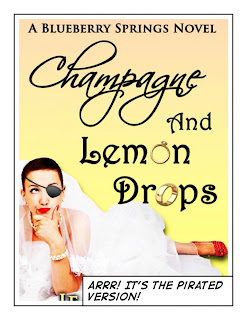 Two weeks ago I self-published my chick lit novel (a FREE romance ebook!! YAY!) Champagne and Lemon Drops. Within 48 hours there was a pirated version competing against my own on Amazon.com. And they were virtually indistinguishable. (You can read the full tale of digital piracy here.) At first I thought it was a glitch, but after more snooping and chatting with others I discovered digital plagiarism was afoot.
Therefore, today's tips are about how to go about finding your pirated writing online. This is not a discussion about digital piracy or DRM or whether publishing traditionally will somehow save you (it won't). This is about how to find your pirated works, because if you are lucky, illegal copies are going to surface. (Lucky because it means you aren't completely obscure and other people feel you have something profitable on your hands.) Why these tips? Because at the end of the day if you can't find your pirated novel online, how are you going to request its removal?
The bad news: Book plagiarism and piracy is common.
The good news: It is actually difficult for pirates to make money from your pirated novel.
1. Don't Use Google Alerts
You didn't expect that one, did you? Truth is, Google Alerts generally culls the 'best' of the net even if you choose for it to report "everything." If you take away one thing from this post, take away this: DO NOT rely on Google Alerts to email you notices as an effective way to watch for piracy.
Why? I've had Google Alerts on my name for years and 99 times out of a 100 it alerts me that my name has appeared… on my blog. Thanks. Helpful. Really. Not. Has Google Alerts found a mention for my novel's title yet? No.
2. Use Google Search Tools
While the answer might not be Google Alerts, it is still in the Google family: Google (the search engine). Cozy up with it.
The only problem with Googling is that you end up sifting through the same stuff every day--and if you are getting your name and book title out there, you have more to look through each day. This is where Google's search tools come in. (See the screenshot below.) You'll notice when you click on "Search Tools" you can search by timeframe. (P.S. Yes, you can use other search engines--just be sure they have a timeframe search feature so you don't waste your time.)
Note: If you find your book listed on a file sharing site or a free ebook site, be careful! Make sure your firewall and virus software is up to date before you visit that site. In fact, in some cases you might not even want to go there. Why? Because some of these sites use ebooks as bait in order to get your email address, credit card info, or to place malware (eg. keyloggers) on your computer. If your browser warns you the site is nefarious, don't. go. there. You might consider the free add-on WOT (Web of Trust) for your browser--it's a smart idea. It will tell you if a site is safe or not with a green, yellow, or red circle. See screenshot below:
3. What to Search For: Three Things That Help Find Pirated Content
Google your name (in quotes), your book title (in quotes) and a unique sentence from your book (in quotes). You can't trust that the pirate is going to use your name on your title and on your content. Smart pirates mix it up.
Why quotes? Because you receive more accurate results. No point sifting through recipes for lemon drop champagne punch, right? Although it really does sound yummy!
4. Search Regularly
I recommend doing this daily. Yes. Daily. If not daily, every other day. The faster you are able to report piracy, the faster your content is removed. And if you can't do it daily, definitely do during in the weeks following some wonky stats (good or bad), you release a new book, or one of your books gets a new shot in the arm with some extra attention whether it is a blog tour, review from a fairly well-known reviewer, or hitting a bestseller/breakout list.
5. Search Book Sale Sites
Even if you are vigilant about searching for your title, name, and a sentence from your novel, you aren't going to discover whether there is a pirated copy on Amazon or your other ebook vendors sites. (At least my pirated version on Amazon didn't show up in my Google searches.) You will want to also keep an eye on your downloads--if they suddenly drop off or make a leap you may have a pirated copy working with/against you.
Note: You are going to want to search for both your name and your title on Amazon.com as well as a foreign Amazon site (trust me on this--Amazon is very good at dealing with piracy and sometimes you can't see pirated copies on the regular .com site). Yes, it is extra work, but it is also worth it. This advice applies to other bookselling sites.
Tip: If in doubt, don't shrug it off, contact the site owner and provide as much information as possible to find out if it is a pirate at work or just a glitch.
If you are interested in reading more about piracy, check out FTWA blogger Charlee Vale's post about her tussle with piracy as a photographer--a must read if you are considering getting professional author photos. As well, if you think your book has been pirated or you want to read more about piracy as well as learn how to get your pirated book off of Amazon, read this post on The Helpful Writer which includes more helpful tips as well as my full piracy story.
P.S. If you've dealt with piracy or have comments on this subject leave us a comment below.
Jean Oram is a contemporary romance author who provides a helpful tip a week on her writing blog, TheHelpfulWriter.com. She also has a website for her chick lit books at www.jeanoram.com. You can find Jean on Twitter as @jeanoram and on Facebook. You can download a FREE copy of her ebook Champagne and Lemon Drops on Smashwords (all ebook formats).
 Two weeks ago I self-published my chick lit novel (a FREE romance ebook!! YAY!) Champagne and Lemon Drops. Within 48 hours there was a pirated version competing against my own on Amazon.com. And they were virtually indistinguishable. (You can read the full tale of digital piracy here.) At first I thought it was a glitch, but after more snooping and chatting with others I discovered digital plagiarism was afoot.
Therefore, today's tips are about how to go about finding your pirated writing online. This is not a discussion about digital piracy or DRM or whether publishing traditionally will somehow save you (it won't). This is about how to find your pirated works, because if you are lucky, illegal copies are going to surface. (Lucky because it means you aren't completely obscure and other people feel you have something profitable on your hands.) Why these tips? Because at the end of the day if you can't find your pirated novel online, how are you going to request its removal?
~ ~
The bad news: Book plagiarism and piracy is common.
The good news: It is actually difficult for pirates to make money from your pirated novel.
How to Find Your Pirated Works Online:
1. Don't Use Google Alerts
You didn't expect that one, did you? Truth is, Google Alerts generally culls the 'best' of the net even if you choose for it to report "everything." If you take away one thing from this post, take away this: DO NOT rely on Google Alerts to email you notices as an effective way to watch for piracy.
Why? I've had Google Alerts on my name for years and 99 times out of a 100 it alerts me that my name has appeared… on my blog. Thanks. Helpful. Really. Not. Has Google Alerts found a mention for my novel's title yet? No.
2. Use Google Search Tools
While the answer might not be Google Alerts, it is still in the Google family: Google (the search engine). Cozy up with it.
The only problem with Googling is that you end up sifting through the same stuff every day--and if you are getting your name and book title out there, you have more to look through each day. This is where Google's search tools come in. (See the screenshot below.) You'll notice when you click on "Search Tools" you can search by timeframe. (P.S. Yes, you can use other search engines--just be sure they have a timeframe search feature so you don't waste your time.)
 |
| Google Search Tools. Choose Your Timeframe. |
Note: If you find your book listed on a file sharing site or a free ebook site, be careful! Make sure your firewall and virus software is up to date before you visit that site. In fact, in some cases you might not even want to go there. Why? Because some of these sites use ebooks as bait in order to get your email address, credit card info, or to place malware (eg. keyloggers) on your computer. If your browser warns you the site is nefarious, don't. go. there. You might consider the free add-on WOT (Web of Trust) for your browser--it's a smart idea. It will tell you if a site is safe or not with a green, yellow, or red circle. See screenshot below:
 |
| The Red Circle on the Right Means Evil Site: Do Not Enter! (WOT in Action.) |
3. What to Search For: Three Things That Help Find Pirated Content
Google your name (in quotes), your book title (in quotes) and a unique sentence from your book (in quotes). You can't trust that the pirate is going to use your name on your title and on your content. Smart pirates mix it up.
Why quotes? Because you receive more accurate results. No point sifting through recipes for lemon drop champagne punch, right? Although it really does sound yummy!
4. Search Regularly
I recommend doing this daily. Yes. Daily. If not daily, every other day. The faster you are able to report piracy, the faster your content is removed. And if you can't do it daily, definitely do during in the weeks following some wonky stats (good or bad), you release a new book, or one of your books gets a new shot in the arm with some extra attention whether it is a blog tour, review from a fairly well-known reviewer, or hitting a bestseller/breakout list.
5. Search Book Sale Sites
Even if you are vigilant about searching for your title, name, and a sentence from your novel, you aren't going to discover whether there is a pirated copy on Amazon or your other ebook vendors sites. (At least my pirated version on Amazon didn't show up in my Google searches.) You will want to also keep an eye on your downloads--if they suddenly drop off or make a leap you may have a pirated copy working with/against you.
Note: You are going to want to search for both your name and your title on Amazon.com as well as a foreign Amazon site (trust me on this--Amazon is very good at dealing with piracy and sometimes you can't see pirated copies on the regular .com site). Yes, it is extra work, but it is also worth it. This advice applies to other bookselling sites.
Tip: If in doubt, don't shrug it off, contact the site owner and provide as much information as possible to find out if it is a pirate at work or just a glitch.
If you are interested in reading more about piracy, check out FTWA blogger Charlee Vale's post about her tussle with piracy as a photographer--a must read if you are considering getting professional author photos. As well, if you think your book has been pirated or you want to read more about piracy as well as learn how to get your pirated book off of Amazon, read this post on The Helpful Writer which includes more helpful tips as well as my full piracy story.
P.S. If you've dealt with piracy or have comments on this subject leave us a comment below.
Jean Oram is a contemporary romance author who provides a helpful tip a week on her writing blog, TheHelpfulWriter.com. She also has a website for her chick lit books at www.jeanoram.com. You can find Jean on Twitter as @jeanoram and on Facebook. You can download a FREE copy of her ebook Champagne and Lemon Drops on Smashwords (all ebook formats).
Wednesday, March 20, 2013
Paper Plates—A Letter from the Trenches
by Charlee Vale
Dear Readers,
On Valentine's Day, I participated in the Pitch-a-Partner Festival, hosted by FTWA's very own Mindy McGinnis, MarcyKate Connelly, and R.C. Lewis.
I had a really good day, and I decided that since my query letter was good enough for that, I'd send out some queries. I did. Now what ...
Being in limbo is something a lot of writers go through, and at every stage of the process. In limbo waiting for queries, in limbo waiting for request responses, in limbo waiting on submission, in limbo waiting for your editorial letter. For most of you reading this post, I imagine it's the first one, just like me.
Every writer has their own way of coping with the limbo. Some people, like me, flounder because we haven't quite found our coping mechanism yet. And while I was thinking about how to deal with this, I was reminded of a story my college choir director told me.
I'd like to share it with you:
A classical pianist went into a studio to record an album. As the day went on he became more and more frustrated, as he didn't feel the tracks were good enough—He made mistakes, and had to repeat the songs over and over. Finally he became so frustrated he stormed out of the studio, needing air.
While he was wandering the halls, he passed a studio where an R&B artist was recording. He stopped to watch for a moment and what he saw amazed him. The man recording was having fun—not only that, but there seemed to be joy pouring out of the recording studio. When the man finished his take the pianist went inside and introduced himself, expressed his troubles and asked how it was that the man seemed to have such joy in the recording process. To which the man replied: "You treat your music like fine china, I treat mine like paper plates."
Art doesn't have to be rigid. We can always change it, and there will always be more. We don't have to worry about dropping it or breaking it. If we don't like something, we can discard it and start again.
I know that the query trenches are hard, and sometimes they even feel impossible. I know that when you're in the middle of it, it feels like if something doesn't happen it will be the end of the world—that if this book, this story doesn't reach the world we'll die, but we won't.
We shouldn't stop our lives for it. Keep on living, keep on creating, keep on writing. Know that whatever you need to do to get yourself through the query trenches, you WILL make it, even if making it means a painful parting.
So to all of you in the query trenches, I'm there with you. Carry on.
Charlee
Charlee Vale is a Young Adult writer, photographer, and tea lover living in New York City. You can also find her at her website, and on Twitter.
Dear Readers,
On Valentine's Day, I participated in the Pitch-a-Partner Festival, hosted by FTWA's very own Mindy McGinnis, MarcyKate Connelly, and R.C. Lewis.
I had a really good day, and I decided that since my query letter was good enough for that, I'd send out some queries. I did. Now what ...
Being in limbo is something a lot of writers go through, and at every stage of the process. In limbo waiting for queries, in limbo waiting for request responses, in limbo waiting on submission, in limbo waiting for your editorial letter. For most of you reading this post, I imagine it's the first one, just like me.
Every writer has their own way of coping with the limbo. Some people, like me, flounder because we haven't quite found our coping mechanism yet. And while I was thinking about how to deal with this, I was reminded of a story my college choir director told me.
I'd like to share it with you:
A classical pianist went into a studio to record an album. As the day went on he became more and more frustrated, as he didn't feel the tracks were good enough—He made mistakes, and had to repeat the songs over and over. Finally he became so frustrated he stormed out of the studio, needing air.
While he was wandering the halls, he passed a studio where an R&B artist was recording. He stopped to watch for a moment and what he saw amazed him. The man recording was having fun—not only that, but there seemed to be joy pouring out of the recording studio. When the man finished his take the pianist went inside and introduced himself, expressed his troubles and asked how it was that the man seemed to have such joy in the recording process. To which the man replied: "You treat your music like fine china, I treat mine like paper plates."
-----
Art doesn't have to be rigid. We can always change it, and there will always be more. We don't have to worry about dropping it or breaking it. If we don't like something, we can discard it and start again.
I know that the query trenches are hard, and sometimes they even feel impossible. I know that when you're in the middle of it, it feels like if something doesn't happen it will be the end of the world—that if this book, this story doesn't reach the world we'll die, but we won't.
We shouldn't stop our lives for it. Keep on living, keep on creating, keep on writing. Know that whatever you need to do to get yourself through the query trenches, you WILL make it, even if making it means a painful parting.
So to all of you in the query trenches, I'm there with you. Carry on.
Charlee
Charlee Vale is a Young Adult writer, photographer, and tea lover living in New York City. You can also find her at her website, and on Twitter.
Monday, March 11, 2013
Tips & Tricks for Writing on the Go
by MarcyKate Connolly
One of the drawbacks of life in general is that it takes up an awful lot of time. Things like work, family, and friends can seriously cut into one's writing days. So what's an author to do if s/he wants to actually, you know, write?
Take heart, dear writer, for it can be done. Here's some tips I've found helpful when I have to write on the go:
1) Always have something to write with on your person. This could be a netbook, iPad, smartphone, or simply a pen and paper. If you don't have those tools, you can't write, can you?
2) Don't waste a minute. Standing in line at a store? Waiting to pick up your kids? Train running late? Take out your writing instrument of choice and get to it. Yeah, you may only jot down a few words, but how many times a day do you find yourself waiting? Those minutes--and words--add up faster than you'd think.
3) Look for every opportunity. It's easy to let those little moments slip by. And hey, sometimes we all just need a break to relax. But if you're drafting or on deadline, maybe take more of them to write instead?
4) Ask for help. Communication is key. Make sure your family knows what you're up against. They might be more understanding than you think.
5) Voice recording and Speech to Text apps. Ideal for those with a long commute by car (though not so much by train or carpool), apps like Dragon Dictation or Evernote can help you save those ideas even if you don't have your hands free. Just keep your eyes on the road, please!
6) Shower Post it notes. GENIUS. Enough said.
MarcyKate Connolly writes middle grade and young adult fiction and becomes a superhero when sufficiently caffeinated. When earthbound, she blogs at her website and spends far too much time babbling on Twitter. Her debut upper MG fantasy novel, MONSTROUS, will be out from HarperCollins Children's Books in Summer 2014.
Monday, March 4, 2013
Checklist - Out of the Mouths of Babes
by Jemi Fraser
As many of you know, I teach elementary school (10 - 12 year olds this year). The other day I asked my students what makes a great book. In order, here are their answers in their words (I didn't edit/suggest a single thing)...
When I use this as a checklist for my own writing, I realize I'm going to have to work on my cliffhangers. How about you? How does your wip stack up with their list?
Jemi Fraser is an aspiring author of contemporary romance. She blogs and tweets while searching for those HEAs.
As many of you know, I teach elementary school (10 - 12 year olds this year). The other day I asked my students what makes a great book. In order, here are their answers in their words (I didn't edit/suggest a single thing)...
- strong beginning/hook
- good conclusion - have to wrap it up right
- interesting characters who act like real people
- interesting setting
- no boring stuff in the middle (they loved when I described this as "saggy middles")
- unique plot twists and surprises
- strong vocabulary - especially good verbs
- suspense - you have to wonder what's going to happen next
- action, excitement and/or horrifying moments
- cliffhangers
- more books by the author (they don't like when they can't read another by their favourite author right away!)
- good cover and title - otherwise who's going to take a risk?
When I use this as a checklist for my own writing, I realize I'm going to have to work on my cliffhangers. How about you? How does your wip stack up with their list?
Jemi Fraser is an aspiring author of contemporary romance. She blogs and tweets while searching for those HEAs.
Friday, March 1, 2013
Know When to Just Stop Talking
by Mindy McGinnis
People who know me well are probably double-checking the title of this post, wondering if I'm really the best qualified person to address this particular issue. While I may be a bit of a talker, one thing I do know is when to stop. At least, in a professional setting.
I've been to quite a few conferences, and I admit that I love them. There's no such thing as awkwardness when all you need to start a conversation with a complete stranger is ask, "So, what do you write?" Even though I'm a country girl, I don't mind a room jam-packed with like-minded individuals ... as long as those people aren't standing in front of me and monopolizing the time of someone I'd like to talk to as well.
It constantly amazes me that people who are willing to shell out the money to attend a conference, and perhaps travel a great deal to get there, have no idea how to pitch themselves in a face-to-face environment.
There never fails to be a handful of people who make their pitch to the agent/editor/bookseller, hand them the business card, and then proceed to ask about a mutual friend, or what their favorite book might be, or ... (yes, really) how they've felt about the weather lately.
It's onerous. It's painful for the person you're addressing because they're trying their best to be professional and courteous as well. They can't very well say, "Excuse me, you did your bit. Now move." So instead their eyes glaze over, they nod like a bobble head, and their smile starts to seem suspiciously stitched on.
Meanwhile there are roughly 10-15 people standing behind that Talky McTalkerton who have something to say that's actually relevant, and trust me, Talky just became their least favorite person.
How do you avoid being Talky McTalkerton? Here are some tips.
Especially if it's me.
Mindy McGinnis is a YA author and librarian. Her debut, Not a Drop to Drink, is a post-apocalyptic survival tale set in a world where freshwater is almost non-existent, available from Katherine Tegen/HarperCollins September 9, 2013. She blogs at Writer, Writer Pants on Fire and contributes to the group blogs Book Pregnant, Friday the Thirteeners, The Class of 2k13, The Lucky 13s and The League of Extraordinary Writers. You can also find her on Twitter, Tumblr & Facebook.
People who know me well are probably double-checking the title of this post, wondering if I'm really the best qualified person to address this particular issue. While I may be a bit of a talker, one thing I do know is when to stop. At least, in a professional setting.
I've been to quite a few conferences, and I admit that I love them. There's no such thing as awkwardness when all you need to start a conversation with a complete stranger is ask, "So, what do you write?" Even though I'm a country girl, I don't mind a room jam-packed with like-minded individuals ... as long as those people aren't standing in front of me and monopolizing the time of someone I'd like to talk to as well.
It constantly amazes me that people who are willing to shell out the money to attend a conference, and perhaps travel a great deal to get there, have no idea how to pitch themselves in a face-to-face environment.
There never fails to be a handful of people who make their pitch to the agent/editor/bookseller, hand them the business card, and then proceed to ask about a mutual friend, or what their favorite book might be, or ... (yes, really) how they've felt about the weather lately.
It's onerous. It's painful for the person you're addressing because they're trying their best to be professional and courteous as well. They can't very well say, "Excuse me, you did your bit. Now move." So instead their eyes glaze over, they nod like a bobble head, and their smile starts to seem suspiciously stitched on.
Meanwhile there are roughly 10-15 people standing behind that Talky McTalkerton who have something to say that's actually relevant, and trust me, Talky just became their least favorite person.
How do you avoid being Talky McTalkerton? Here are some tips.
- Have a business card with your relevant information on it. Tell the person your name when you introduce yourself, but don't recite your website url or your email address. Put that information on your business card, as well as any other social media that might be pertinent. Hand that useful piece of paper to them, and keep the interesting things about you for conversation. Everybody has links. You've got something better to actually talk about.
- Have something ready to say. Don't walk up to anyone for a quick FTF and have nothing prepared. Have your elevator pitch ready if you're approaching an agent, or a speedy "Hi there, I'm looking to set up a signing with a group of fellow MG authors if you'd be interested," for the bookseller. Don't walk up and say, "Hi, I'm Talky McTalkerton and I'm a writer." Duh. They didn't think you were a crude oil miner.
- Ask the right questions to the right people. Don't approach a bookseller or librarian with the pitch for your unpublished book. Don't approach an editor with questions about how many first run printings you can expect from the book you haven't finished writing yet. Don't approach an agent and ask how to succeed in digital self-publishing. Sure, they might have some information that might help you with your question, but honestly they're probably going to redirect you to someone who is better equipped to answer you ... and you just wasted their time plus the time of everyone behind you.
- Know when Networking is Notworking. It's amazing how dense some people can be about social cues. Is the person you're talking to packing up their stuff as you fling words at them? Yeah ... that means they're ready to leave and you're stopping that from happening. Are you following them and throwing words at them sideways while they're walking? Yeah ... they're trying to get away from you (unless they invited you to walk with them to their next panel). Are they purposely looking over your shoulder or smiling at the person behind you to encourage them to step up and say their piece? Yeah ... they're done talking to you.
Especially if it's me.
Mindy McGinnis is a YA author and librarian. Her debut, Not a Drop to Drink, is a post-apocalyptic survival tale set in a world where freshwater is almost non-existent, available from Katherine Tegen/HarperCollins September 9, 2013. She blogs at Writer, Writer Pants on Fire and contributes to the group blogs Book Pregnant, Friday the Thirteeners, The Class of 2k13, The Lucky 13s and The League of Extraordinary Writers. You can also find her on Twitter, Tumblr & Facebook.
Subscribe to:
Posts (Atom)