Monday, January 28, 2013

The Market Within

by Cat Woods

Last week while collaborating with a handful of publishers on a project, a question was posed.

Who will buy this book?

It wasn’t a figurative way of asking who will read it, but rather, who will literally—physically—buy the book and why?

You see, there are two types of audiences writers need to consider, particularly when penning juvenile literature: those who will lovingly read each and every page, and those who will put the pages into the hands of the intended readers.

As writers, we should keep both audiences in mind.

School boards, teachers and librarians have tremendous buying power. It’s no secret that books which can be tied to a school curriculum have been used in the classroom. That’s a potential audience of roughly 135,000 schools in the United States alone. Furthermore, decisions on which books to read in the classroom are made by approximately 7.2 million teachers.  In the US alone.

This is true whether a book is fiction or nonfiction, fantasy or contemporary. If educators can use a book to enhance a lesson, they are much more likely to purchase it for their classrooms.

What does this mean for writers?

  1. Know how your book will reach your audience. Will your book be purchased by parents, grandparents, teachers, friends or kids themselves? Knowing how your audience will be exposed to your writing can make a difference in its marketability. F-bombs and gratuitous scenes will not endear your work to the gatekeepers, effectively whittling away at your sales potential.
  2. Know the current education standards and curriculums. Things have changed in the twenty or forty years since we graduated from high school. Heck, even my little boys are learning far more advanced material than their older siblings did, and that’s only a seven year span. My fifth grader actually had to write an algebraic equation from a word problem. Write it, then solve it. Back in my day, we just had to solve them—and that was in the tenth grade. Knowing what goes on in the classroom will up your chances of selling a book to school staff.
  3. Know how to handle tough topics with care. Schools have always used literature to help shape the social and moral landscape of the children entrusted in their care. Now more than ever, kids are turning to books to help them through the myriad problems they face. When we can write tastefully, truthfully and sensitively about these topics, the opportunity of finding our work on classroom shelves grows.
  4. Lastly, write one heck of a good book. Because the finished product matters. If we preach, we lose. If we teach, we lose. If we bore, we lose—big time. Kids don’t read what they hate. Above all else, we must write a compelling story that will interest the estimated 77 million students of our intended audience.
Those are big numbers, my writer friends. How do you plan to use the audience within to your advantage? Does your writing have an educational tie-in that can put your work on school shelves, or is your book for juvenile readers only? More importantly, how can we satisfy both of our audiences? And when do we want to segregate them?

Curious minds want to know.

As a juvenile lit writer, Cat Woods has been known to pen educational tie-ins from time to time, allowing her to present in classrooms. Her short stories can be found in Spring Fevers and The Fall: Tales from the Apocalypse, while her writing journey can be found on her blog Words from the Woods.

Friday, January 25, 2013

5 Reasons Why We Fail at Our Writing Goals

by Jean Oram

Blah, blah, blah New year's Resolutions, blah, blah, blah. You've already broken some, haven't you? A study out of University of Scranton (I know! Scranton really actually exists beyond The Office!) says that by this time in January approximately a THIRD of us have FAILED at our resolutions. One third. That's within the 2-4 week period after New Year's. And only 8% of resolution makers are successful in achieving their resolution.

Okay, before you go shove your mouth full of cake and give up on your publishing quest and writing resolutions… listen to this:

People who explicitly make resolutions are 10 times more likely to attain their goals than people who don’t explicitly make resolutions. Source

In other words, keep making resolutions and keep making GOALS as you are more likely to succeed.

But why do we fail and what can we do about it?

I'm so glad you asked.

5 Reasons We Need to Set Goals in Order to Succeed as Writers


1. We can be likely to take the path of least resistance (i.e. a tad lazy).

People who make goals (not talking resolutions now, just goals because goals are a PLAN, not a HOPE or a WISH) are 80% more likely to succeed. Goals are plans with timelines, and a specific end goal. When you make a goal you tell yourself some interesting things--and one of them is to get up and get moving. (A powerful way to achieve your goal is to remind yourself of that goal as soon as you get up in the morning--even before a cup of joe.)

How to succeed: Make a goal. Don't talk yourself out of it. Find a way to make it happen.

2. We get vague.

Written goals lead to conscious and an intentional working towards them. Why? Because we've had to write them down and in doing so we can see exactly what we need to get to and then automatically begin breaking down what we need in order to get there. It engages a part of our brain that says, "How do I…?" and "Why do I…?" and "What do I…". We get specific.

How to succeed: Write down your goals and be specific about what you want to accomplish at what level and by what date.

3. We get distracted.

Goals are plans. They are a way to stay on track by giving us something specific to work towards--especially if we check in on them regularly. Writing down our goals helps us focus on the steps to get to our goal.

How to succeed: check in with your goals on a regular basis to see how you are doing.

4. We shrug off our ideas and 'stuff.'

Goals can help us stay personally accountable as well as stay motivated in reaching our 'plan.' But it is easy to shrug it off when faced with diversions, failures, and roadblocks unless we make ourselves accountable on a larger (ego-smashing) level. In other words, find a goal buddy. Find someone to check in with--ideally someone who can be both encouraging as well as willing to give you a swift kick in the denim.

How to succeed: Social pressure. Make yourself socially accountable.

5. We fail to see how far we've come.

One of the coolest things about setting goals is watching your own progress. I used to write down HUGE goals and then only check in once a year. Oh, wow. Look all that failure in a three-ring binder. Ouch. Now, I have a notebook where I write down what I want to accomplish that week or day and I check off all the things I've done as well as keep stats on my platform growth. Looking in that book is the proof that I am actually getting somewhere. I can also feel the success (daily if I want). And that, in turn, spurs me towards more achievements. You could even say it is empowering and provides resilience.

How to succeed: Be kind, rewind. I mean, be kind to yourself if you fall down. Enjoy your successes.

Now that you've looked at goal setting from the write angle, what are your goals for 2013? What stands in your way? How do you plan to leap that hurdle? Share in the comment section.

(And by the way, how are those resolutions going?)

Jean Oram has set more goals than she has time to accomplish, but she is still happily blogging away about writing at Jeanoram.com as well as tweeting as @jeanoram. She has a post-apocalyptic chick lit short story, Crumbs, in The Fall: Tales From the Apocalypse.

Wednesday, January 23, 2013

New Year, New Faces!

From the Write Angle is coming up on its second birthday (hard to believe—already?), and part of what's kept us going is the opportunity to associate with writers from so many areas within the publishing sphere. We're thrilled to introduce two new perspectives you'll be seeing in the coming weeks.

First up is Brighton Luke, whose creativity spans novel-writing to filmmaking and beyond, as we saw when we asked him to write a bio:

Brighton hails from Texas where he likes to spend lazy afternoons at the George W. Bush Presidential Library. An avid horseman, Brighton pens westerns despite the complete un-marketability of the genre. All of his stories are inspired by the ideas of his talking cat Noodles, a former Jewish gangster from Brooklyn, who was sentenced to a lifetime of crushing snuggles and photo shoots for his actions in the Sergio Leone film Once Upon A Time In America. When not writing, Brighton enjoys kayaking amongst his oil rigs in the Gulf of Mexico.

We'll be hearing more from Brighton as soon as we drag him away from the ski slopes of Vermont.

Next up is Charlee Vale, who has a rare inside/outside view to the world of publishing:

Charlee is a Young Adult writer, photographer, aspiring editor, actor, and lover of tea. She lives in New York City, and is finishing up her Master’s degree in Theatre Performance and Playwriting. When not writing you can find her reading (bookshelf zero WILL happen at some point), painting, photographing, and of course brewing tea. She currently interns with Libby Murphy as an editorial apprentice Entangled Publishing. You can find her on twitter, and at her website Charleevale.com.

We're looking forward to Charlee's perspective on publishing from both a writer's and editor's view (and how theater plays into it all).

Please give a warm welcome to these new Write Anglers, and keep an eye out for their debut posts coming soon!

Monday, January 21, 2013

Hey, Y'all: Dialects and Slang

by Riley Redgate

Haff you ever read dialogue vere the vords look a beet strange?

'ave you read dialog where words sound right funny in yer 'ead 'cause of 'ow they show up?

Or maybe them quotations get to seemin' real Southern alluva sudden. (Billy, fetch me mah shotgun!)

I haven't seen many stylistic choices that polarize readers as much as written dialects do. Some people despise them with every fiber of their being, and words like "gimmick" inevitably get thrown out with regard to them in conversation.

Personally, I think it adds a nice bit of variety to the mix. Some writers use it to great effect—one of my favorite series has dialect not only in dialogue, but in the actual first-person narration. But sometimes it feels awkward, or worse, unnecessary.

It's certainly an interesting choice, because it takes "Show, don't tell" to an extreme. I mean, if you simply wanted to get a description of a voice in there, you could write, "She spoke with a thick Slavic accent." Or, of course, you could describe a voice more figuratively—"Each of his words was crisp and well-measured, a bite of something acidic." But when you encounter an author who writes the words as they actually sound under the influence of that accent, it's a constant reminder. If it's well-done, it turns into a pleasant auditory effect rather than a weird garbled distraction. A bit of atmosphere.

It is a fine line to walk, though. If "dialected" words aren't there enough, they'll jar when they crop up again. On the other hand, if they're too present, you risk complete incomprehensibility. Yeow.

It's an important issue, because it brings to the forefront the issue of sound in writing. I was a musician long before I was a writer, so rhythm and sound are paramount to me, especially when I'm doing line edits. Most people even read their manuscripts aloud at some point to get that auditory perspective. Either way, whether you internalize the flow of a line or hear it with your earholes, you can tell when it clicks into place—and you can sure as hell tell when it's clunky. Sound helps bring shape to the form of sentences, paragraphs, pages. It speeds the pace or drags it behind; it casts a line for the reader or yanks them in. And hoo boy, does it make or break humorous writing.

Most people know sound is an important step, but rarely do writers have to confront sound so directly in the drafting stage as in the case of dialects. I mean, you've got onomatopoeia, etc., but for so many people, the real 'music' of the writing often comes through in later drafts.

Slang, too—another sound-related tool—seems to polarize readers. Maybe not to the extent of dialects, but I've noticed that weird curses or terminology can quickly end up seeming like a crutch. Unfamiliar terms pop out of the text, naturally, and since the readers are extra-conscious of them, they sometimes seem like they're there twice as much as they actually are. There's a recent trend toward futuristic slang in speculative manuscripts—and it's a fine line to walk. If it doesn't sound cool, it'll feel awkward. And just like dialect, it can't fade into the background altogether, or suddenly it'll pop up again like a friend you forgot you had. And the interaction will be uncomfortable. And y'all don't want that happenin', now, do ya?

Are you a fan or a foe of dialects? How about slang?

Riley Redgate, enthusiast of all things YA, is a bookstore-and-Starbucks-dweller from North Carolina attending college in Ohio. She blogs here and speaks with considerably more brevity here.

Friday, January 18, 2013

Storytelling and Role-Playing

by Matt Sinclair

The other night I met a person who writes for a nonprofit organization, creating marketing copy and anything else the organization needs to communicate its message. Her organization was hosting the event I was attending, so I figured she would be moving on to mingle with other people, but before she left I asked her whether she ever wrote fiction. The next thing I knew the two of us were chatting for another fifteen minutes -- even though her answer was no.


“What I like most about writing nonfiction is that it’s like putting together a puzzle,” she said, and then gave me some examples of projects she’d been working on and how she assembled marketing packages and messages. She interviewed people, she researched the products and services that were being promoted, and she coordinated with others within the organization to ensure that it said what people wanted it to say.


In a non-confrontational way, I said that fiction is a puzzle also, but as the writer you not only get to assemble the picture, you also design the shapes and cut and fashion them so they fit together exactly right. That’s when she told me about how she used to write short stories and how she still loves reading short story writers. (Yes, she now has a link to the Elephant’s Bookshelf Press anthologies. I’m learning about promotion, after all.)


What’s the lesson from this little encounter? To my mind, it’s that writers of all genres and media, whether it’s fiction, nonfiction, commercial copy, poetry, playwriting, blogging, all have a common goal in mind: communicating a message. In a word, “Storytelling.”


In another way, the encounter was a reminder that we often find ourselves with opportunities to expand our audience. Earlier that same day, I exchanged several Twitter messages with a writer who started following me. I’d not known her before, but her Twitter description sounded interesting. I think she’ll submit a story for the summer anthology from EBP. But I probably wouldn’t have reached out if she hadn’t been clear in her brief Twitter bio about what she writes.


Perhaps this is obvious, but whether we’re writing or selling a book, pitching an agent, following a writer on Twitter, we’re always telling a story. It won’t be a hit with everyone, but if you tell your story well and target it to the right people, you might be surprised to find how many readers you reach and how many appreciate your talents. 

Matt Sinclair, a New York City-based journalist and fiction writer, is also president and chief elephant officer of Elephant's Bookshelf Press, which recently published its latest anthology, The Fall: Tales from the Apocalypse, which is available via Amazon. Earlier this year, EBP published its initial anthology, Spring Fevers, which is still available through Smashwords, Amazon, and in print via CreateSpace. Both anthologies include stories by fellow FTWA writers, including Cat Woods, J. Lea Lopez, Mindy McGinnis, and R.S. Mellette; R.C. Lewis and Jean Oram also have stories in The Fall. Matt blogs at the Elephant's Bookshelf and is on Twitter @elephantguy68

Wednesday, January 16, 2013

WHAT IS YOUR STORY WORTH?

by R.S. Mellette

The best advice I ever got on writing was from an acting teacher my freshman year.  I asked her about playwriting.  "I don't know anything about writing," she said, "but I know that a Broadway play costs $50."  (Okay, I just dated myself).  "You have to write a story worth $50 to the average working person."
That always struck me as an excellent test of quality.  Can I tell a story that is worth the audience's cold hard cash?  That's a standard that is visceral.  It's real.  It cuts through all of the literary, English major crap and gets right down to nitty-gritty.  The most important critical question I have for any reader is, "did you get your money's worth?"

That question has become top of the list in this digital day and age.  What is a story worth?  Is it $2.99?  $9.99?  $13.99?  Will amateur authors flood the market with such low-priced material that professionals can no longer make a living?  Is it better to sell ten books at $2.99 or three at $9.99?  If you do sell a lot of books at a low-price, should you then raise the price?

And there is the question of the value of a publisher's stamp.  When Harper Collins publishes a book, they are saying, "Out of the thousands of books we've screened, this one is worth your time and money."  What is that recommendation worth?  As publishers put out more books on the e-market, do they de-value the worth of their stamp?
In talking about traditional verses e-publishing, the questions of value centered around hard costs like paper, printing, art, etc.  Now, of course, we're learning that e-packaging – metadata, formatting, meeting platform requirements – come at a cost.  But the real question is harder to answer.  What is the story itself worth?  Storytellers are unique to our species.  We are not human without them, but how much are we willing to pay them?

I don't have the answers.  Do you?

R.S. Mellette is an experienced screenwriter, actor, director, and novelist. You can find him at the Dances With Films festival blog, and on Twitter, or read him in the Spring Fevers and The Fall: Tales of the Apocalypse anthologies.

Monday, January 14, 2013

Doing Contests Write

by MarcyKate Connolly

If you're a writer in the query trenches, you've likely seen and even participated in writing blog contests. They're fun! They're exciting! And it's oh so easy to get swept up in it all. I know, because it was one of my favorite things to do!

But before you shoot off that entry, take a deep breath, relax, and make sure you're doing it right.

DO be sure your manuscript is complete and polished within an inch of its life. There's nothing worse than winning an agent request for your full manuscript and realizing you need to scramble to finish that first draft. And oh, crud, you gotta revise that puppy, too? All that pressure can be avoided by just finishing the dang thing first.

DON'T enter a contest if you've queried all the judging agents. I know how tempting it is. Maybe they'll see your book differently now that you changed that paragraph in your query, or rewrote the opening scene. Or maybe it still won't be for them and all you've done is take a spot from someone else. Don't be that guy or gal. Mystery agent contests are trickier because you don't find out who the agent is until the picks are made. Obviously not much you can do there but close your eyes, hit send, and hope for the best!

DO ask questions. Most blog contests have an announcement post before the entry window. If you're unclear on the rules, don't be afraid to ask in the comments. Others might have the same questions.

DON'T freak out if you don't get picked. Sometimes you'll miss the submission window. Sometimes your entry won't get past the preliminary judging. Sometimes every entry will get a request but yours. This is totally normal and even to be expected. Subjectivity is kind of a bitch. Sure it sucks, but don't let it get you down for too long. Keep trying—maybe next time will be your turn to win :)

DO make friends with other contest entrants! This is a fabulous opportunity to find new critique partners, or just general writerly camaraderie. Case in point, last year's Writers Voice contest.

DON'T stress too much. I know it's hard, but it's important! Your writing career does not depend on any single contest. Seriously. So have fun, keep your chin up, and try not to stress.

DO keep querying. Every contest is different and provides a new way of presenting your work. I've seen everything from one line pitches, Twitter pitches, one paragraph pitches, full queries, first lines, first pages, first paragraphs—you get the idea. Not everyone is good at all of these. Just because your 13-word pitch didn't blow an agent's socks off doesn't mean your actual query won't.

If you're looking for contests to enter, you're in luck! There's a bunch coming up and several blogs that run them regularly.

Current Contests:
Other Blogs to watch for Contests:

MarcyKate Connolly writes middle grade and young adult fiction and becomes a superhero when sufficiently caffeinated. When earthbound, she blogs at her website and ferrets out contests on Twitter. Her debut upper MG fantasy novel, MONSTROUS, will be out from HarperCollins Children's Books in Summer 2014.

Friday, January 11, 2013

Voices in Time

by S. L. Duncan

When asked, most editors say what draws them to a submitted project is voice. Don’t you just hate that? Because, inevitably, when asked what defines a good voice they sort of shrug their shoulders, don their beret, take a large puff of cigarette and say, “Je ne sais quoi.”

Well, they do in my head at least.

There’s been a lot of excellent coverage of what voice can be here at FTWA, so feel free to review that for a moment. The kind of voice I want to talk specifically about, is the voice necessary to tell a story that takes place in a different time period.

So on the elements of what voice is, or can be, let me add this: authenticity.

I’m turning in my second book to my agent this week and the last thing I did was take a final read and make sure that the voice is authentic to the time period. A great way to see how the times affect voice is look at recent decades. Compare how kids spoke in the 80s to how they speak now. Slang aside, there are subtle differences in how they relate to each other. Do they lock eyes and twirl their gum when they speak, or are they focused on their iPhone, droning on like a zombie?

And it isn’t just vernacular. Society and culture influence voice as well. Take a 1940s London fourteen-year-old. The scarcity of that time and the living day to day in a harrowing environment grants a certain patience and appreciation for things, which should show up in the voice of the character.

So how do you get there? How do you make a voice authentic to its time? I looked at old newspapers, movies from the era, and radio recordings. The best are archived private journals. But, wait! What if your time period is waaay back? Keep digging! Look closely at all aspects of the culture. Crack a history book or two. Read, read, read, books from leading experts in the field.

All these things will play a part in the voice of the story and your individual character's voices. A good example is Sophie Perinot's work. She captures the tone and voice of her time period perfectly, but she does the research.

And I know I said it before, but you gotta read. Read stuff that's similar to what you want to write. Read in your genre. Read brilliant books, and just as importantly I think, read horrible books.

Authentic voice is a lot of things. There isn’t really any one way to master it, and more often than not, it kinda just happens after you've put in the work. Take the time, though, if you’re writing to a specific moment in history to really get in the head of that moment in history. You’ll be surprised at how it affects the voice.

S. L. Duncan writes young adult fiction, including his debut, the first book in The Revelation Saga, due in 2014 from Medallion Press. You can find him blogging on INKROCK.com and on Twitter.

Wednesday, January 9, 2013

Fresh Starts

by Jemi Fraser

It's that time of year when many people look forward and back to see where they are - to re-evaluate their position in their lives and see how they're doing with their goals. In that theme, today I'd like to talk about Fresh Starts.

I like Fresh Starts - they're exciting and invigorating. To me, there's nothing quite like that initial blank page - so full of potential and possibilites.

But a fresh start doesn't have to be a brand new project. It can be a chance to rework an older ms that's been sitting on the shelf for a while. For me, it's impossible to see a project clearly unless it's been sitting for a few weeks - and even then, it's better if I've written or revised another project in the meantime. Then my eyes and my brain are fresh. I don't know about you, but my brain hangs on to certain phrases. Without that simmering time, I can read right over issues because my brain knows what I really wanted to write in the first place.

But once I've had that time, I can see the project with fresh eyes. I fall in love with my characters again and see where the problems lie much more easily!

So a fresh start might not be a fresh project, but an older idea or ms that's been marinating while you've worked on something else.

What kinds of fresh starts do you like best? Do you let your projects simmer while you work on something else?

Jemi Fraser is an aspiring author of contemporary romance. She blogs and tweets while searching for those HEAs.

Monday, January 7, 2013

All Things in Moderation - Even Writing Advice

by J. Lea LĂłpez

 Have you ever watched one of those weight loss stories where the person who's lost 120 pounds says something along the lines of, "I had tried everything. Every fad diet, every pill. Everything. Then one day I woke up and I knew I couldn't live like this any more. I was killing myself. That's when I started my journey to getting truly healthy. It was hard work. But I did it, and I feel great."

Well, I'm there. With my writing, that is. And hopefully you can learn from my journey.

I also have weight struggles, but I've never been one for crash dieting to the extreme. There are all kinds of "cures" and systems out there, many of which seem to contradict each other. Low Glycemic, Atkins, Weight Watchers, Gluten-free, Paleo, all bacon all the time (I don't know if that's really a diet, but I could get behind that). There are a lot of people who seem to do well on each of these plans, but sometimes people can take it to unhealthy extremes. The same goes for writing advice. Taken to extremes, even the best advice can be detrimental to your writing. I'm sure you've heard - and tried to implement - a lot of it:

  • No adverbs. Ever!
  • Action, action, action! Tension, all the time! 
  • Be unique - but don't be so unique that you're the only one who will get your writing.
  • Start smack dab in the middle of the action and let every word further the plot from there.
  • Banish every trace of passive voice.
  • Read all the classics because they're the only benchmarks by which to measure your talent!
  • Characters shouldn't growl, breathe, or hiss their words. Using anything other than "said" is a crime against humanity!
  • Personalize your query - but don't kiss ass.
  • Blog, tweet, market, network and get your name out there - but do it the "right" way.
The list could go on and on. There are valid points of advice that inform each of those statements, of course, but too often we try to incorporate too much of other people's advice into our technique. Then we wonder what happened to the voice, the pizzazz of our own writing that we were pretty sure was there when we first started.

I was tweeting with a writing friend the other day about food and nutrition. I told her that my approach now was more along the lines of everything in moderation, while focusing on thing that are as natural as possible, not depriving myself of fun stuff, not beating myself up when I don't eat as well as I want, and being aware of foods that are triggers or have specific health consequences for me, as opposed to what other people tell me my body should or shouldn't have.

Then I realized my personal approach to writing and publishing had shifted to something very similar recently.

Somehow, somewhere, one day, something just clicked. I'm open to learning new things, hearing criticism, discovering better ways to do things and challenge myself as a writer. But the bottom line is that literary crash diets, like the nutritional ones, will ultimately get you nowhere. I know my own strengths as well as my own weaknesses, and the plethora of writing advice and literary techniques are like a massive buffet that I can pick and choose from to get my desired results.

This year, I hope any of you prone to dangerous writing crash diets will learn to take all advice in moderation and trust your writerly gut. Do you know why there are so many nutritional plans out there that all seem to work for so many different people? Because health and nutrition isn't one-size-fits-all. Neither is writing.

If you've deleted every adverb and gerund from your writing and it still seems a bit sickly, take a deep breath and a step back. Trust me, it will click. It will be hard work to get your writing into prime condition. But it will be worth it.

Are you guilty of crash dieting with writing advice in an attempt to get your writing in tip top shape?

J. Lea LĂłpez writes erotica and women's fiction. Find her on Twitter or her blog. To read some of her mainstream short stories, check out the anthologies The Fall: Tales from the Apocalypse and Spring Fevers. Find some of her erotic short stories on her Facebook page.

Friday, January 4, 2013

Book to Film ... Is That A Good Thing?

by Mindy McGinnis and R.S. Mellette

A conversation between a Hollywood screenwriter and a Midwestern librarian about the different mediums for delivering a story, and the perception that one is better than the other.

MM: Lately I've been thinking about books becoming movies. Especially with the current YA trends, I've had a lot of people asking me if my book is going to be a movie. As with The Lord of the Rings and The Hobbit, the general public reaction when a much-loved book is turned into a film is—"Well, FINALLY!" I feel like there's a pervading perception that the film is the epitome of the story being told, not the book itself. As if graduating from paper to screen is a step up, if that makes sense.

I'm wondering why this is. Is it because film is a more easily digestible media that reaches more people? Is it because the amount of money required to create a film as opposed to a book implies that there is more worth in those stories that "make it" to becoming films?

RSM: I think it's the fact that it reaches more people. We all want to share our experiences, whether it's a book, play, movie, or whatever. Think about when you see one person notice someone else reading a book they've read: "I love that book!" and—Wham! An energetic conversation will start between two people who otherwise might have never met. Of course, e-readers ruin all of that, but that's the topic of another post.

With the mass marketing of a movie, the whole world shares the experience of that story. Even if they don't go to the movie, they can say something about it. It's a shared story, and I think human beings need that like we need food.

MM: We don't ever see movies being made into books. No one ever says, "Hey, you know that awesome movie blah blah blah? It's a BOOK NOW!" And people run out to buy it. That doesn't happen.

RSM: (laughs). No, it doesn't, does it? I think they used to write books based on movies, but I don't know if there's still a market for it. That would be more of the fault of the people producing the books than the fans. On Xena: Warrior Princess, the books were terrible. A marketing person years later told me, "None of us really got Xena." They novelized the series, but the fans didn't buy the books. They could tell there was no heart in them.

MM: There is a counterargument there in that movies directed at children do become "junior novelizations" and such, but to me that's much more marketing and dollar-driven than actually saying, "Wow, this NEEDS to be made into a book."

RSM: Yeah, and it's a shame, because—if done correctly—a book can tell the story more thoroughly. I've adapted novels into screenplays, and screenplays into novels, and I can tell you, a movie is just a sampler plate of the entire meal of a novel.

Plus, an artist has more freedom in a book. There is no budget. On Xena, when she faced an army, it was fifteen people on horseback because that's all we could afford. I read an early draft of the first book, and the author did the same thing. In my notes, I suggested that she open it up. An army should be the size of an army. Ink and paper (or now, electrons) costs the same no matter what the words are. And you don't have to feed them every six hours.

On another note, I imagine people are salivating over your book becoming a film, and that must feel weird to you, huh? What's that like?

MM: Yeah, it’s definitely odd. I’m not sure how I feel about it, to be honest. My books are exactly that—movies in my head. So I know exactly what it looks like already. No one is going to be able to reproduce that, and I’ll have to adjust.

I feel like it already is a movie with an audience of one, cast with people who don’t really exist and don’t look like famous actors. And it’ll be like that in the head of every reader I get my hands on. They can cast themselves as the main character, their friends as the supporting characters, their crush as the love interest. Doesn’t having it cemented in place by Hollywood kind of ruin that?

RSM: I think it absolutely ruins that, but be honest—don't you fantasize about what it would be like to be on the set of your own movie? How have those expectations changed from before you had an agent, to before you had a deal, to now?

MM: I think about it, sure. But like I said, I’m definitely not convinced it would be a good thing. I’ve read stories about authors showing up on set and being endlessly controlling and making it a horror for everyone until they leave. I don’t want to be that person, and I know my place. But I also don’t want to see someone else’s variation of my story being the one that gets the mass media attention.

How has that changed? Actually it kind of went backward. Before I had an agent or a deal I was convinced that was exactly what I wanted—the big film, the big exposure, the must-see movie of the season. Now I’m not so sure. If it’s not mine, or I’m not involved with it in any way, does it actually bear any relation to me?

RSM: Absolutely it relates to you. Without you, none of those people ruining your work would have a job! One thing that's good to keep in mind if you're writer on a film set is that you worked as hard as any of the crew for months or years before they even knew there was a movie to make. Some crew don't realize that, so they think the writer is useless. If you're not careful, you might find yourself believing it, too.

MM: I think that's a very valid and pervading fear for me. That once it's out of my hands it has become its own thing, and I'm no longer of consequence. I've always been under the impression that writers in Hollywood are unsung heroes. Is that the case?

RSM: In LA, if you tell people you're writing a screenplay, they look at you like you have plague. But if you say you're a novelist, you can hear respect in their voice as they say, "Really? Good for you."

MM: Yeah, but what if you say you’re writing a novelization of a screenplay?

RSM: I've heard, "That's a good idea." If only they knew that finishing a novel and finishing a movie are equally difficult.

How do you feel about books being made into movies? Does it make you cringe at the idea of someone else executing your story? Or do you think it's the culmination of years of your effort?

Mindy McGinnis is a YA author and librarian. Her debut, NOT A DROP TO DRINK, is a post-apocalyptic survival tale set in a world where freshwater is almost non-existent, available from Katherine Tegen / Harper Collins September 9, 2013. She blogs at Writer, Writer Pants on Fire and contributes to the group blogs Book PregnantFriday the ThirteenersFrom the Write AngleThe Class of 2k13 and The Lucky 13s. You can also find her on TwitterTumblr & Facebook.

R.S. Mellette is an experienced screenwriter, actor, director, and novelist. You can find him at the Dances With Films festival blog, and on Twitter, or read him in the Spring Fevers and The Fall: Tales of the Apocalypse anthologies.

Wednesday, January 2, 2013

Resolved


by Sophie Perinot

Writers, like non-writers, often mark the New Year by committing themselves to a collection of resolutions, usually in the form of an earnestly drawn-up laundry list of thing we want to accomplish to forward our work in progress and our careers.  For example, “write 2,000 words a day” is, I would posit, the writer’s equivalent of the average person’s “lose ten pounds.”

I am skeptical of the power New Year’s resolutions.  I think they have, for the most part, forgotten where they came from, and so have we.  They have become nothing more than vague promises we make ourselves at a particularly optimistic moment (when the world is new again and everything seems possible).  And if we don’t keep them later. . . well. . .

Yep.  Pretty darn useless.

This year I suggest that we—wordsmiths by trade—cast our minds back to the root of the term resolution—the word “resolve.”  Resolve is powerful indeed.  True resolve impresses and gets things done.  Take a look at this definition (from Merriam-Webster):

Resolve (noun): 1) fixity of purpose: resoluteness.

Pow! That’s an old-fashioned, commanding concept.  I sit up straighter just reading the definition, don’t you?

So, instead of picking half-dozen specific writing resolutions in these first days of 2013, jotting them down and promptly forgetting where I’ve stuck them, I am going to rediscover my fixity of purpose (I know I set it down somewhere—maybe behind the pile of research books).  When I locate it, I am going to wield it like a sword and treat my work with the urgency and determination that true resoluteness demands.  If (or rather when because set backs are inevitable) I fail to meet the weekly goals for my latest manuscript I am going to recognize my justifications of this failure for what they are—excuses.  Pitiful excuses.  I am going to remind myself that this is a job.  A real work ethic and not just good intentions are needed to get it done.

That’s how I am starting 2013—as a taskmaster who knows true resolve generally involves perseverance, suffering and even self-castigation, NOT as a starry-eyed, optimist who believes that wishing something done will make it so.  How about you?

Sophie Perinot's debut novel, THE SISTER QUEENS (which tells the story of two 13th century sisters who became the queens of England and France) released in 2013.  She is currently working on her Sophomore novel, a task that requires considerable resolve. You can find Sophie at home here, or on Facebook at her author page or the page for her novel.  She is also active on twitter.

Friday, December 21, 2012

Talking the Talk ... on the Phone

by R.C. Lewis

2012 turned out to be an eventful year for me. I signed with an agent in late May, and she sold my book just a couple of months later. The agent-getting part involved five agents offering representation, so I had The Call five times—three of them in one day. With submissions, I talked to two offering editors on the phone.

The phone is not my favorite thing in the world.

It makes me feel awkward, and like I have to really concentrate to catch every word as well as every nuance of tone since I have no body language and facial expression to cue off of. And my agent (bless her!) let me know I had some bad habits.

See, once upon a time (when I was a teenager—no, I won't say how many years ago that was), I had a friend who would talk on the phone for hours. Usually some kind of teenage drama or another that she wanted to rant about. If I didn't say "uh-huh" on a fairly regular basis, she assumed either I wasn't there or didn't agree with her stance of being outraged at the situation. So I got used to a lot of, "Uh-huh, I'm still with you."

I also have a mother who can't always find the word she's looking for. Somehow, I almost always know what that word is, I provide it for her, and we continue the conversation. It's just how conversation works with her.

But you know what? When you do either of those on the phone with strangers, it can be kind of annoying and off-putting.

Not exactly the impression you want to give prospective agents and editors, right?

Honestly, I was always listening and paying attention to what the other party was saying. (How could I not? Agents and editors!) But I learned that it's important to sound like you're listening by not saying anything at all. In my case, I learned to wait until a direct question was asked or there was a full second of silence—more than just taking a breath—to take my turn at talking.

And I'm definitely glad my agent was direct and honest enough to train me up on that before my editor calls.

So, when preparing for The Call at any level, definitely get a list of questions ready, things you need to know by the end of the conversation. But also take a hard look at any bad phone-talking habits you might have.

You know what they say about first impressions.

Do you have any tips or tricks for successful phone conversations for a phone-phobic person like me? Any strategies for handling the inevitable nerves that come with high-pressure phone calls?

R.C. Lewis teaches math by day and writes YA fiction by every other time. Her YA sci-fi novel Stitching Snow will be published by Disney-Hyperion in Summer 2014. Meanwhile, you can find her at Crossing the Helix and on Twitter (@RC_Lewis).

From the Write Angle will be taking next week off. Happy Holidays to all our readers, and Good Writing in the New Year—break a pencil!


Wednesday, December 19, 2012

On Procrastination

by Riley Redgate

Hello there, FTWA readers!

It's Wednesday. I have two final exams on Thursday. I have another one on Friday. This is a blog post.

Let's talk about procrastination!

Do you know why procrastination is easy? I do.

It's not scary.

The actual writing part of life almost always involves some element of I'm Not Good Enough. Editing, drafting while knowing you'll have to go back and edit 90% of what's coming out of your fingers, querying, synopsizing - the whole deal involves self-criticism. And procrastination, happy activity that it is, does not. It allows you to think of your work in the positive terms of the abstract, even whilst you cheerfully shirk it. Malformed sentences go away. Characterization issues disappear into the ether. And plot holes? What plot holes?

Procrastination happens because we're scared of what could happen in its stead. We could spend hours on a single scene and emotionally exhaust ourselves. Worse, we could spend hours on a single scene and then realize that scene needs deletion. We could rewrite our query four times and still realize it's not good enough.

For example, let's take my current mode of procrastination. I have not looked back over the book that I should have looked over several times by now for Friday's exam. Why? Because I'm scared I'll get to it and realize I need to memorize a million things I don't already know. I'm trusting in what I've already done rather than rediscovering what I've done and what I need to fix. Procrastinating, I can say, hey! You know what? I know a lot of things. Here's what I've learned. A lot of things, right? I'll be fine, eh?

After I finish writing this blog post, I will read the book in question. And, odds are, I shall rapidly discover I have yet some things to brush up on.

So the cure to procrastination? Make it as scary as going back to your unfinished draft.

Here's why you should be scared of procrastination:

1) You'll regret it later. Nothing's less satisfying than going to bed thinking about what you could have done with your day, and what you did instead of what you could have done.

2) You don't have all the time in the world. You have time. But not infinite time. You have people you love and places to go; you have books to read and other activities in which to participate. You do not have a million hours to spend faffing about on Twitter etc. while your WIP languishes in that other window.

3) It makes the writing harder. What if you get out of practice? What if you forget quite how your MC's particular voice sounds? These are problems not-unheard of. Coming back to an unfinished draft after an overlong break is laborious, and disrupts rhythm, and could be disadvantageous for quality itself.

4) It makes writing feel like work. I mean, come on. What other types of things do you put off? Studying for exams. (Ahem. -averts eyes-) And like, emailing your least favorite relative, and filing taxes, probably. But writing? Writing is a joy to you. That's why you do it. Whether you get an adrenaline rush, a deep satisfaction, a further knowledge about the human condition - whatever. You have a reason to be doing what you're doing. What you don't have is a reason to delay it.

Thus concludes another blog post that sounds more like a lecture/chastisement than it probably should. -sigh- Sorry about that. I'll blame it on finals week stress ... and now I'm off to review Aristotle's Poetics!

Bonne chance! Your WIP loves and awaits you!

Riley Redgate, enthusiast of all things YA, is a bookstore-and-Starbucks-dweller from North Carolina attending college in Ohio. She blogs here and speaks with considerably more brevity here.

Monday, December 17, 2012

Spice Up Your Writing Life

by R.S. Mellette

When I was a kid, daytime talk shows were a different animal than they are today. There was this guy, maybe you’ve heard of him, Phil Donahue. He had a little show in Chicago where he went into the audience to have them ask questions. No one screamed or shouted. The guests were intelligent, and for the most part so were the questions. No one took lie detector tests, and the legitimacy of babies was never discussed. Generally, after watching his show one felt pretty good about the state of human evolution.

For some odd reason I remember seeing a Cajun chef on Donahue once. I don’t remember who he was, but I remember something he said.

“In Cajun cooking, we spice at every level.”

What he meant was, when making the chicken stock, or roux, or dry rub, or sauce, every step gets spiced.

I have taken it to mean that every step of any process needs some special attention. If you write from an outline, then make sure you don’t cut corners there. Spice it up. Make it jump off the page, so when you’re stuck in the manuscript, you can take a taste of the outline and remember what had you so excited in the first place.

If you find you have to add a minor character, give him or her some seasoning. Make us remember that tasty little tidbit. When your characters have to go somewhere, make it a more interesting place.

But remember, spice is, by definition, a small ingredient that has a big impact. Don’t confuse it with flowery. You’re not looking to overwhelm a story, just punch it up a little.

When reading through your work for the millionth time, play a game. Get into your kitchen, bring out your spices, and as you read think about which spice might help in the scene you’re reading. Maybe something unexpected—like some sugar in a salty scene. Maybe something hot. Maybe not. Mix it up.

Spice at every level.

R.S. Mellette is an experienced screenwriter, actor, director, and novelist. You can find him at the Dances With Films festival blog, and on Twitter, or read him in the Spring Fevers and The Fall: Tales of the Apocalypse anthologies.

Friday, December 14, 2012

Five Must Hear Podcasts for Writers

by Jean Oram

I've recently discovered podcasts as a part of my quest to improve my writing. While some of you may be laughing and saying they've been around for ages, it's only recently that two events in my life have conspired to make podcasts something I can sit through.

One is a half decent smart phone that can handle podcasts. And two is (mostly) getting over my Talk Radio ADD. (When I was a kid my parents had CBC (Canadian Public Broadcasting--kind of like NPR) on in every room and every vehicle 24/7. It wasn't until I was a teen that I finally realized there were other radio stations out there. Over time I learned to tune out CBC because it was a lot of talk-talk-talk going on around me all the time. Problem is… my Talk Radio ADD applies to pretty much anything recorded that involves talking whether it happens to be talking books, talk radio, or podcasts. Which means I get a minute or two into a program and slowly, without noticing, I tune out. Welcome to my happy place.)

The podcasts I am recommending here are five that I enjoy and seem to be able to stay tuned into. They are well worth listening to (on your phone or online) and can teach you a lot not only about writing, but about the business side of things as well.

Five Podcasts Worth Listening to for Writers


1. Writing Excuses

Motto: 15 minutes long because you're in a hurry and we're not that smart

Oh my god, what is not to love about that motto? Great, brief, and highly informative podcasts that don't ramble on and waste your time. It's put together by several people and they will often interview others. Seriously great.

Website: http://www.writingexcuses.com

2. Copyblogger

Motto: Content marketing advice and solutions that work


If you follow me on Twitter [@jeanoram] (and if you're not, why not?), you've probably seen me tweeting Copyblogger's blog links. Basically, their podcast covers similar content to their blog. Everything from how to write a headline (for your blog, newsletter, press releases and more) to how to market (your books, your blog!) is covered. Their podcasts include interviews and are always informative. It is a painless way to learn how to draw people to your blog, as well as do a little effective book marketing.

Website: www.copyblogger.com

3. The Creative Penn

Motto: Helping you write, publish and market your book

Put out by author Joanna Penn, it features interviews with authors, marketers, and pretty much anyone who has a thing to do with publishing and writing. While this podcast can ramble a bit, the variety and content makes it worth it. (Plus you can jump ahead.)

Website: www.thecreativepenn.com

4. DBSA Romance Fiction Podcast

Motto: All of the romance, none of the bullshit

That's right. These are smart broads who happen to read category romance. And while their focus is romance some of their podcasts such as "Book Accessibility for Sight-Impaired Readers" is something ALL authors need to check out. You could be missing out on one of the biggest reading markets out there. Listen to it now!

Website: http://smartbitchestrashybooks.com/blog/podcast

5. Grammar Girl

Motto: Quick and dirty tips for better writing

Brush up on your grammar in short and sweet segments. If you've ever Googled anything grammar related, this site has has probably popped up on the first page of results. Something I've learned from their podcasts: "burnt" is typically British, and "burned" is typically American.

Website: http://grammar.quickanddirtytips.com

Now that you've looked at podcasts From the Write Angle which one will you start with first? Are there some must-listen-to podcasts on your list you'd like to share? Let us know in the comment section.

Jean Oram is a fiction and nonfiction writer who writes stuff and is always up for a challenge such as writing post-apocalyptic chick lit such as in her story
Crumbs found in The Fall: Tales From the Apocalypse. She also blabs on about writing on her blog.

Wednesday, December 12, 2012

Save the Snark (and the Hate)

by R.C. Lewis

I've been on Twitter for a few years now, almost exclusively for the writing/publishing side of my life. If you've been around the Write Angle for a while, you know several of us are big fans of Twitter as part of a writer's social media package. Jemi Fraser recently did three different posts on great Twitter hashtags for writers, and Calista Taylor laid out the basics in Twitter 101.

You can get amazing things from Twitter—camaraderie of other writers, news on industry trends and events, and insider tips straight from agents and editors. Amidst all that, you also get what people are eating for lunch, who's coming down with a cold, and complaints about weather/mass transit/utility companies/anything else that can be annoying. Part and parcel.

Here's a small subset of the tweets out there—writers snarking at those industry insiders, especially agents.

They come in several forms, but the underlying sentiment always seems the same. Agents are evil, money-grubbing, elitist jerks. They only want crap from celebrities anyway. They won't take a chance on anyone new.

Now, hang on.

There's nothing wrong with going it alone, whether by self-publishing or working with publishers who take unagented submissions. Many writers find that's the right course for them. For others, the efforts of querying and securing representation are worth it.

Whichever course we choose to take (or maybe both!), why sling hate at the other?

By and large, agents work hard. They often hold down other jobs to pay the bills, essentially working for free on the hope that the books they believe in will sell. I certainly couldn't do what my agent does (fair enough, since I'm pretty sure she couldn't teach my math classes, either).

I imagine there are some agents who are jerks. After all, you can find a jerk or two in just about any group of people. And yes, we have the right to be ourselves and say what we want.

But what possible good comes from being rude (and even at times downright hateful) toward anyone in an industry we hope to be considered professionals in?

No matter what the industry is doing, and no matter our course within it, behaving like a professional will always be in fashion. The same goes for more than agents—editors, fellow authors, and readers deserve it, too.

There's plenty to be gained by developing a reputation of respect.

R.C. Lewis teaches math by day and writes YA fiction by every other time. Her YA sci-fi novel Stitching Snow will be published by Disney-Hyperion in Summer 2014. Meanwhile, you can find her at Crossing the Helix and on Twitter (@RC_Lewis).

Monday, December 10, 2012

Research Like A Third Grader

by Mindy McGinnis

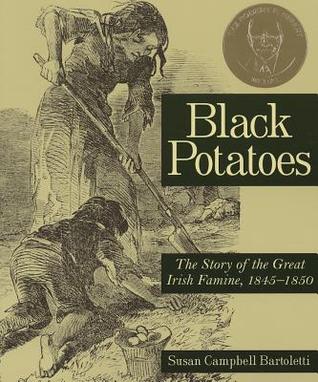
So, you've got an absolutely fantastic idea to write a romance set during the potato famine in Ireland. Maybe you just like the accent, or are drawn to rolling green hills, but the idea is stuck in your head and you can't get it out. So what's stopping you?

Maybe the fact that the accent and rolling green hills is the sum of what you know on the topic?

I don't think the first step is buying a plane ticket. I'm a thorough researcher and I like to exhibit that in my writing, but I don't start by traveling internationally or finding out the bacterial origination of the black rot that wiped out the potatoes in Ireland all those years ago.

Because that's not what I need to know in order to write this story.

I love non-fiction, but reading a dense book (or two) about the immigration statistics and cultural backlash that arose from the potato famine probably isn't going to fire a lot of creative synapses in the brain. It definitely can inform the story, but you're still on square one and drowning this little seed of an idea with 200 gallons of water isn't the best way to nurture it at the outset.

My advice? Go to the kids section of your library or bookstore. Find a very basic book about the topic you want to learn about in order to start this story. Right now your seed needs simple building blocks of life to get a good start - water, sunlight, soil. It's the Who? What? Where? When? of your story, and a non-fiction book written for children will point you in the right direction without the unnecessary equivalent of chemicals and growth additive type facts that are just going to burn the tender roots of your seedling idea and make your brain switch off.

Mindy McGinnis is a YA author and librarian. Her debut, a post-apocalyptic survival tale, Not a Drop to Drink, will be available from Katherine Tegen / Harper Collins in Fall 2013. She blogs at Writer, Writer Pants on Fire and contributes to the group blogs Book PregnantFriday the Thirteeners and The Lucky 13s. You can also find her on Twitter & Facebook.

Friday, December 7, 2012

Morphing Like X-Men

by Lucy Marsden

I try. God knows, I try.

I plot and I plan and I do Goal Motivation and Conflict outlines for them, but are my characters grateful? They are not. Currently, they’re ignoring all the lovely thematic elements I’ve laid out for them, and are morphing like X-Men.

I guess we just can’t have nice things.

Eleven thousand words into this manuscript, it’s looking more like a patchwork quilt than any kind of cohesive narrative, and the people currently in a lip-lock with each other are disdaining any knowledge of the characters who showed up in their first scenes. It’s gotten to the point that I’m grateful to my hero for shifting from the charming con-man I’d originally envisioned, into an irascible Beast—at least I know what he wants and why. But that heroine of mine has regenerated more often than a Time Lord, and if she could find a minute to drop me a post card with the address of her current head-space, I surely would appreciate it.

How is this possible? How is it possible to figure out a forgery plot so good that it synchronistically shows up on an episode of LEVERAGE (Love. That. Show.)—and still be floundering with my heroine? Why won’t that wench just gel, already?

If you, or anyone you know (or anyone you’ve ever even been “Friended” by on Facebook), would like to stop by with a box of tissues, or a stiff drink and an explanation, that would be delightful. Until then, I'm choosing to believe that I am in the process of discovering these characters, and that all will be revealed in the fullness of time.

Please, please, please...

Lucy Marsden is a romance writer living in New England. When she’s not backstage at a magic show or crashing a physics picnic, she can be found knee-deep in the occult collection of some old library, or arguing hotly about Story.


Wednesday, December 5, 2012

3 NaNo NoNos

by Jemi Fraser

It's easy to get caught up in the euphoria that surrounds a NaNo win. After all, writing 50k words in 30 days is something to be proud of. Go ahead and celebrate!


But...

There's always a 'but', isn't there? Here are a few Nano NoNos to keep in mind.

NaNo NoNo Number 1

Submitting your novel on December 1st. Or any day in December. By and large, this is a very bad idea. Maybe you are Super Drafter and your story is error free, but I have my doubts! I know mine sure isn't. I imagine agents cringe when they see the words, "I've just finished this novel for NaNoWriMo..."

NaNo NoNo Number 2

Revising right away. So you decide to give those agents a break over December, but on January 1st, you're submitting. After all, the agents will be rested and salivating over the thought of a new story. Wait! For most writers, it's a really a good idea to let your first draft sit for several weeks before you go back in and revise it. That way, you've got a bit of distance between you and the story. Your brain will actually see the words you've written instead of the words you THINK you've written.

NaNo NoNo Number 3

Putting your novel aside - forever. This is kind of the opposite of the first two. Don't assume your story is garbage just because you wrote it in a month - or because you're sick of it at the moment. Sure, it might be a hot mess, but the idea sparked enough of your creativity for you to spend 30 days on it. I bet if you give it those weeks I spoke about in #2, you'll find there's a lot to like.

So, give yourself some time away, then go back in and dig into the wonder of that first draft your wrote.  Once it really shines, submit away! And make sure you have some cupcakes to celebrate along the way!

Any more NaNo NoNos you can share?

Jemi Fraser is an aspiring author of romantic mysteries, currently recuperating from her NaNo win. She blogs and tweets while searching for those HEAs.